The Population Shift
Visualizing 50 Years of Global Change Across Print, Web & Motion
Graphic Design
Data Visualization
Motion Design
Information Design
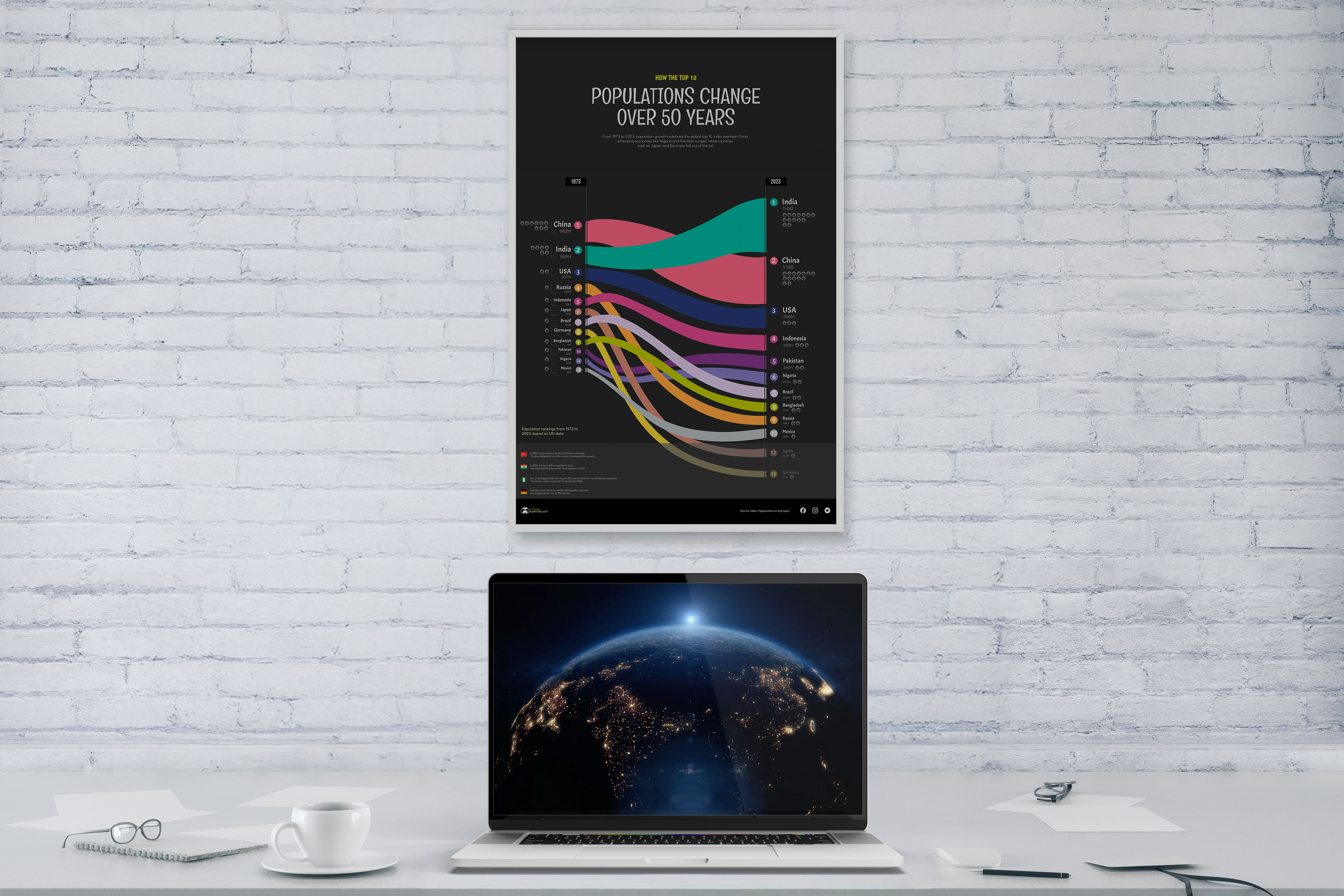
Project Overview
This project explores how a single dataset can transform across media. Beginning with a poster redesign, I translated fifty years of population data into a clearer narrative. I then expanded the story into an interactive web graphic, allowing users to explore decade-by-decade insights. Finally, I created a 60-second motion piece that brings the data to life through animation, sound, and voice-over storytelling.
Client
SCAD / Academic Project
Duration
3 Weeks
Role
Graphic Designer
Problem
The original visualization offered valuable information, but some aspects like the vertical timeline, dense hierarchy, and static format made the long-term population story less intuitive to follow.
The goal of this project was to translate the same dataset into formats that communicate more intuitively, tell a stronger narrative, and adapt across print, web, and motion.
Deliverables
Poster (Print, 18×24 in.)
Interactive Web Graphic
60-Second Motion Film
Storyboard (16 frames)
Voice-over script & sound design
Process
Stage 1: Poster Redesign — Rethinking the Flow of Information
The project began with the goal of reimagining how population data could be visualized across time. I started by studying existing graphics, particularly The World’s Most Populous Countries chart from Visual Capitalist. While informative, I noticed the vertical timeline felt less intuitive for Western readers. Research shows that people often map time in the same direction as their reading habits: left to right, so I decided to redesign the layout horizontally to make it more natural to follow.
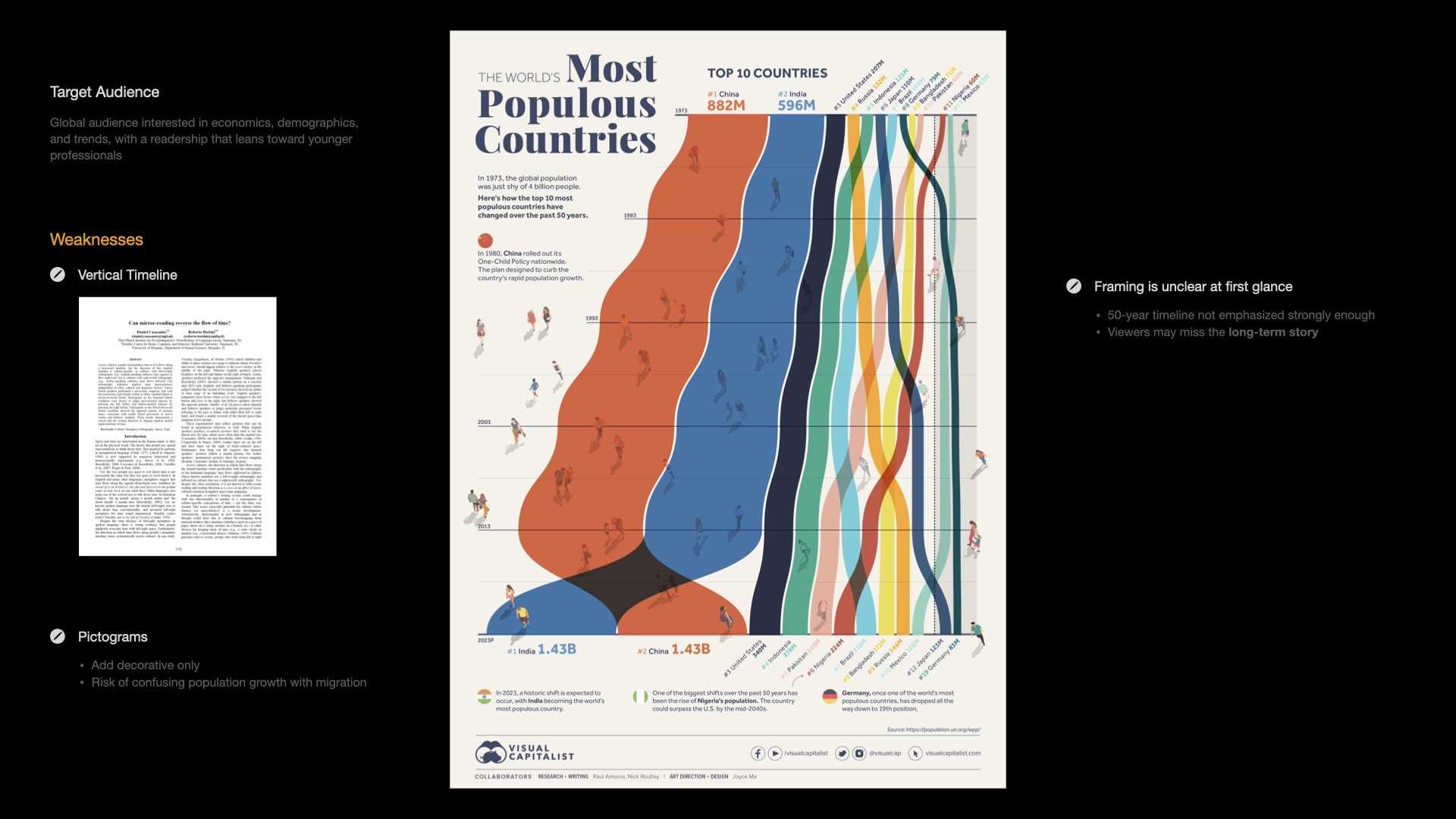
That insight became my starting point. I redesigned the poster horizontally, letting the timeline move from past to present, so viewers could “read through time” as they followed the flow of countries shifting ranks. This simple change made the data feel more narrative and engaging.
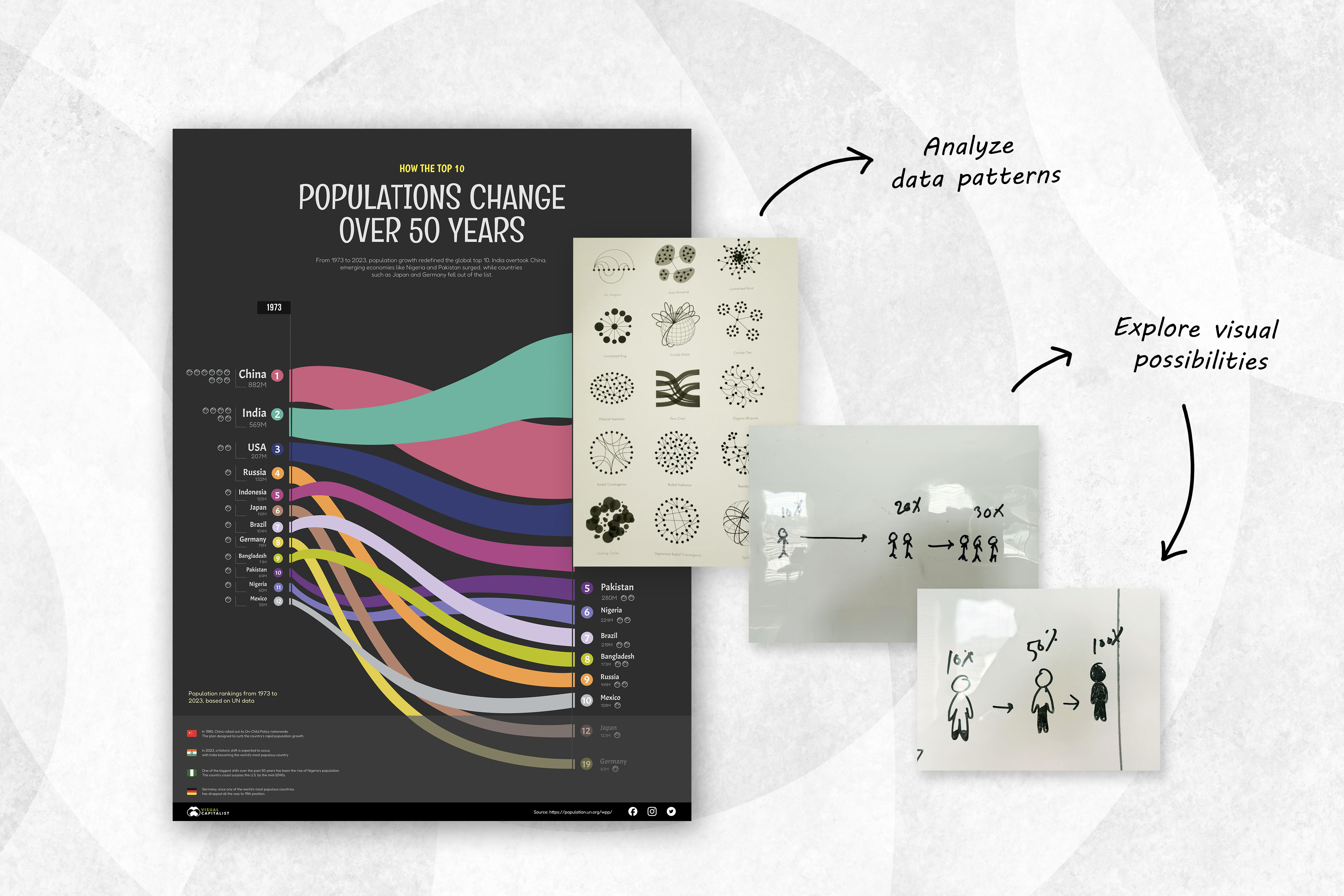
Before finalizing the visual direction, I explored different ways to represent growth experimenting with circles, clusters, and figure-based concepts to understand rhythm and proportion. Some early pictogram tests looked appealing but felt misleading, as they could be interpreted as migration rather than population growth. These studies helped me find a visual language that felt both analytical and human.
From there, I refined the data visualization. Each hue represents both identity and story, while the shifting ribbon widths subtly express population growth over time. As colors overlap, twist, and separate, the story of global population becomes one of momentum, contrast, and transformation.
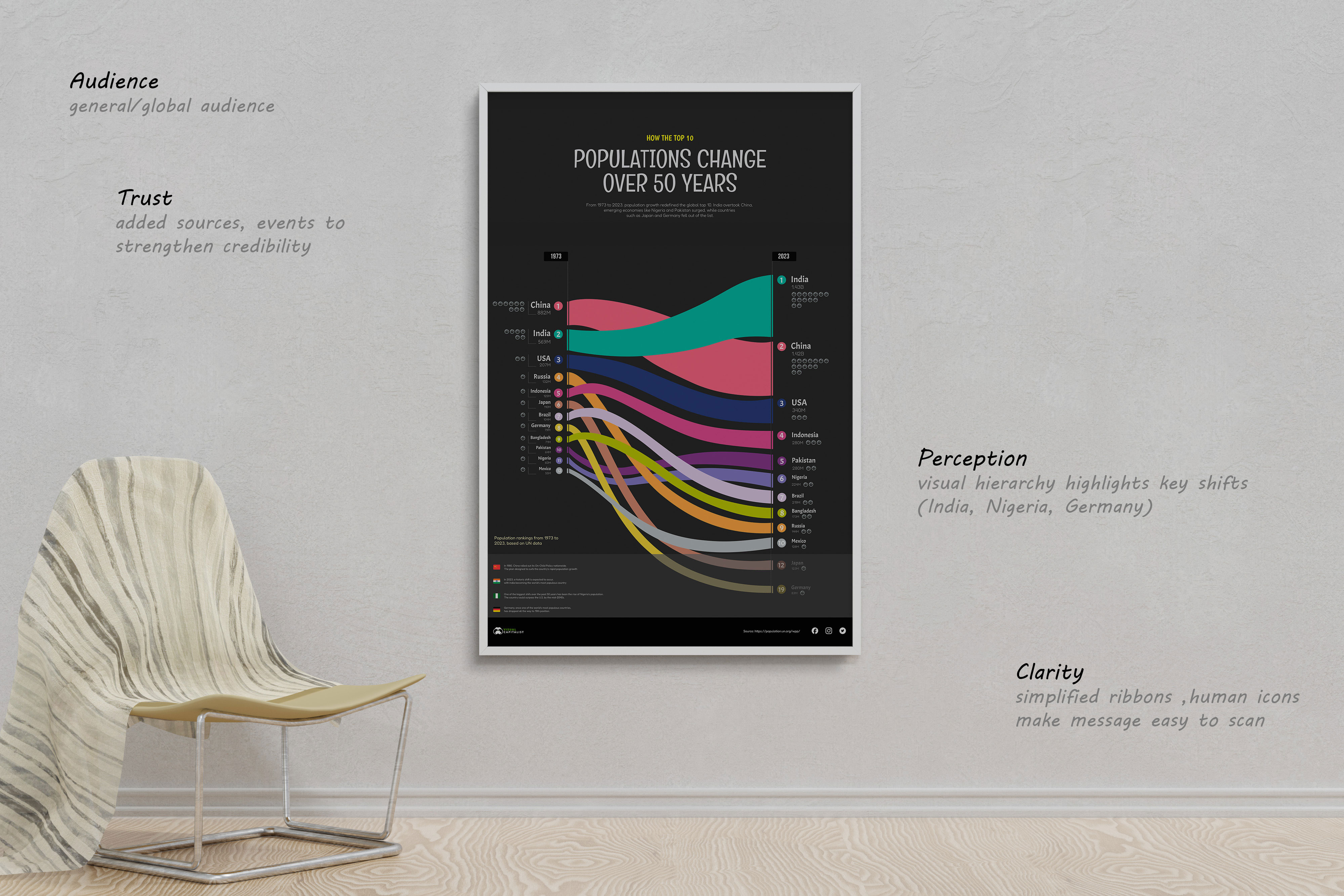
The design aims to make fifty years of population change easier to grasp, not just through data, but through a sense of human connection.
Stage 2: Poster Redesign — Rethinking the Flow of Information
After completing the poster, I wanted to bring the story to life in a more dynamic way…something users could explore and experience at their own pace. For the digital format, I chose a web article graphic, which gave me both space and flexibility to expand the narrative.
The user can scroll through time, hover, and interact with the information making discovery part of the experience. When hovering over a ribbon, key details and incidents expand on the side, showing how population trends connect to real historical moments.
For example, when hovering over China, users see the note about the 1980 One-Child Policy explaining the country’s slowed growth and eventual drop to second place. Each event acts as a narrative anchor, reminding viewers that data is not just numbers, but the result of human decisions and policies.
While the poster was designed to communicate the big story quickly, the digital version focused on deeper exploration. The process taught me that print design pushes for clarity and simplicity, while digital invites layering and discovery. Together, they show how medium shapes not only visual design but also the way audiences interpret data.
Stage 3: Motion — Bringing the Data to Life
The final stage is to transform the story into motion. The goal was to translate population data into a short, cinematic 60-second piece that could both inform and emotionally connect with the audience. My focus was on turning the same data into a visual story that people could actually feel and follow.
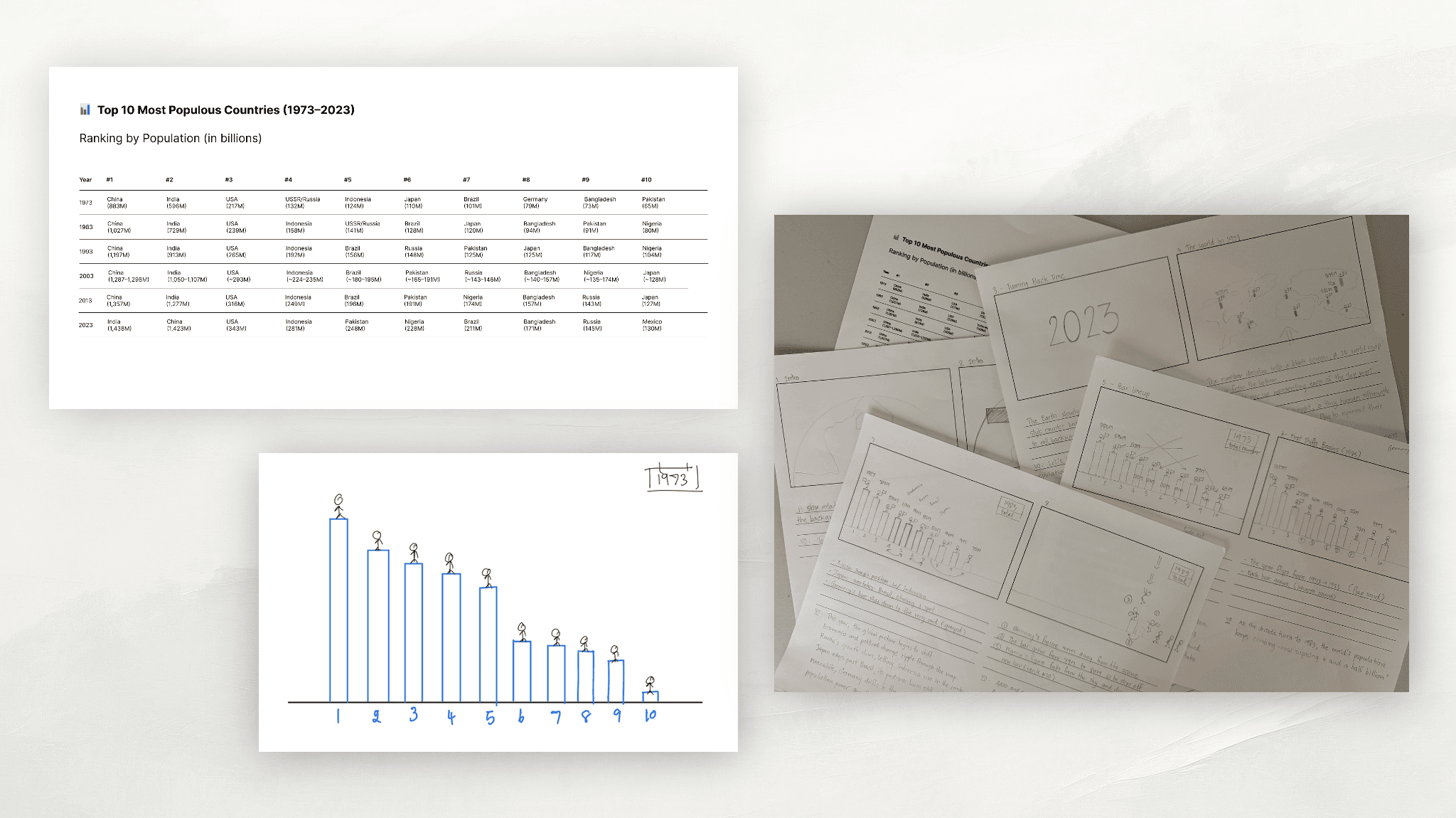
I developed a 16-frame storyboard to map out how the story should unfold.
This included:
Visual beats of each decade
When the bars would grow, shift, or drop out
How new countries would enter the Top 10
How the world map transitions into data
The final emotional question that ends the film
The full voice-over script & sound effects
Moving to the production. I designed all visual assets in Illustrator, including the 3-sided population bars, flag details, and character poses for movement. Each element was separated into layers so they could be animated naturally in After Effects.
The final step was refining timing syncing animation, voice-over, and sound effects to create a cohesive 60-second narrative. Everything came together to tell one clear story of how the world’s population has changed over the past fifty years.
Tool Used
Adobe Illustrator ✦ Adobe After Effects ✦ Premiere Pro ✦ Photoshop ✦ Figma