THouse Delivery
Food Delivery Scheduling Across Web and Mobile (UX Case Study)
UX/UI
Mobile App
User Research
Web Design & Development
Project Overview
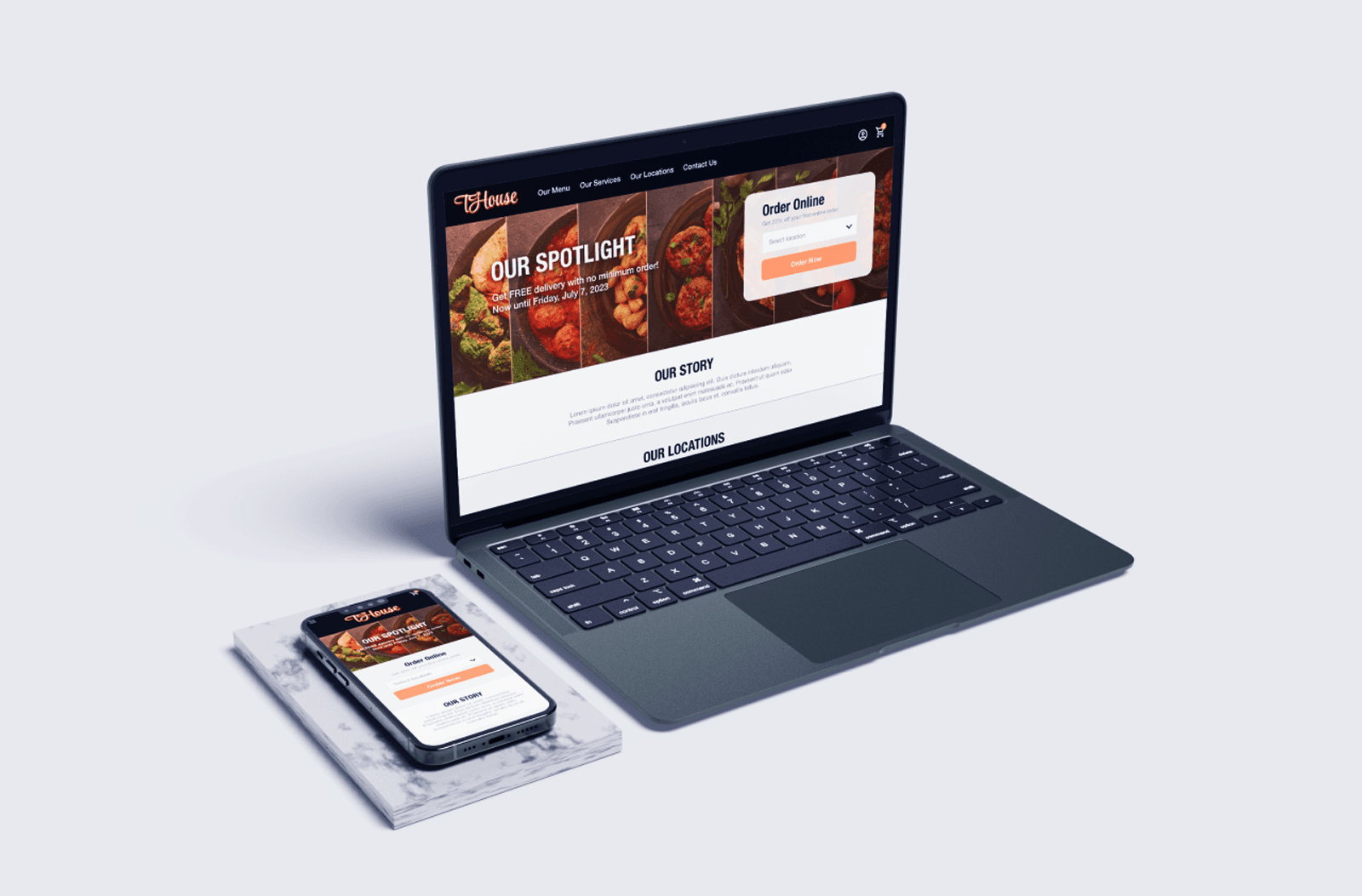
This project involved designing a responsive web and mobile ordering experience for THouse, a Thai restaurant with multiple locations in Atlanta. The objective was to support busy customers by enabling flexible, advance order scheduling directly within THouse’s platform allowing users to select their preferred delivery location, date, and time with clarity and ease.
Client
Google UX Design Certificate (THouse Restaurant)
Duration
2 months
Role
UX/UI Designer
Problem
THouse lacked an integrated delivery scheduling system within its own ordering platform.
Busy customers often faced long wait times during peak hours and had no way to schedule deliveries in advance.
Without scheduling flexibility, customers had limited control over when and where their meals would be delivered leading to reliance on third-party apps and reduced convenience.
Deliverables
Research findings
Customer journey
User Flows
Ideation sketches
Concept development
Wireframes
Process
This project was developed as part of the Google UX Design Certificate program. It explores the challenge of designing a responsive web and mobile experience for THouse, a local Thai restaurant chain in Atlanta with multiple locations.
While THouse offered takeout and delivery through third-party platforms, those services lacked flexible scheduling options for busy customers. Many people need to plan meals between shifts, schedule deliveries in advance, or coordinate drop-offs at specific locations. The goal of this project was to design a more flexible and user-centered delivery scheduling experience that allows customers to choose their preferred location, date, and time, all within a seamless, cross-platform system.
Research & Analysis
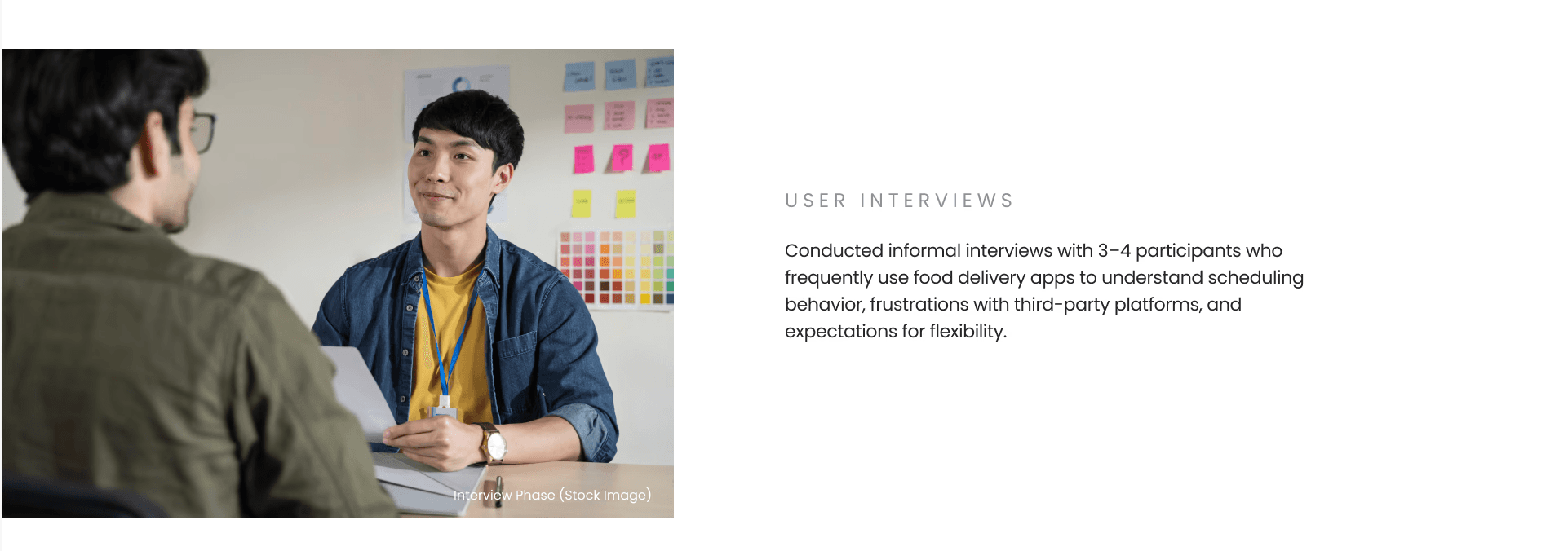
Since THouse did not have an existing digital ordering system, this phase began by examining the broader delivery ecosystem. The research explored how customers rely on third-party platforms and how restaurant operations handle scheduling and fulfillment across multiple locations.
These insights helped define the foundational requirements for building a direct, flexible, and scalable delivery experience from scratch.
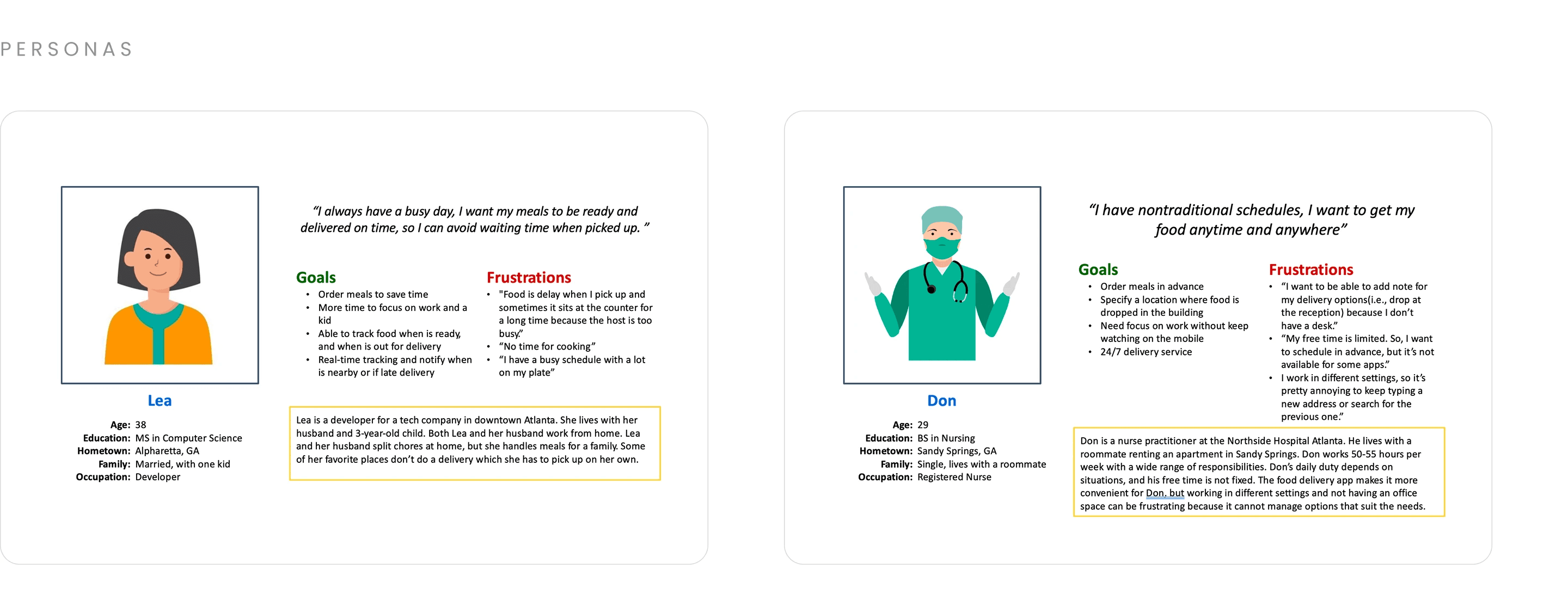
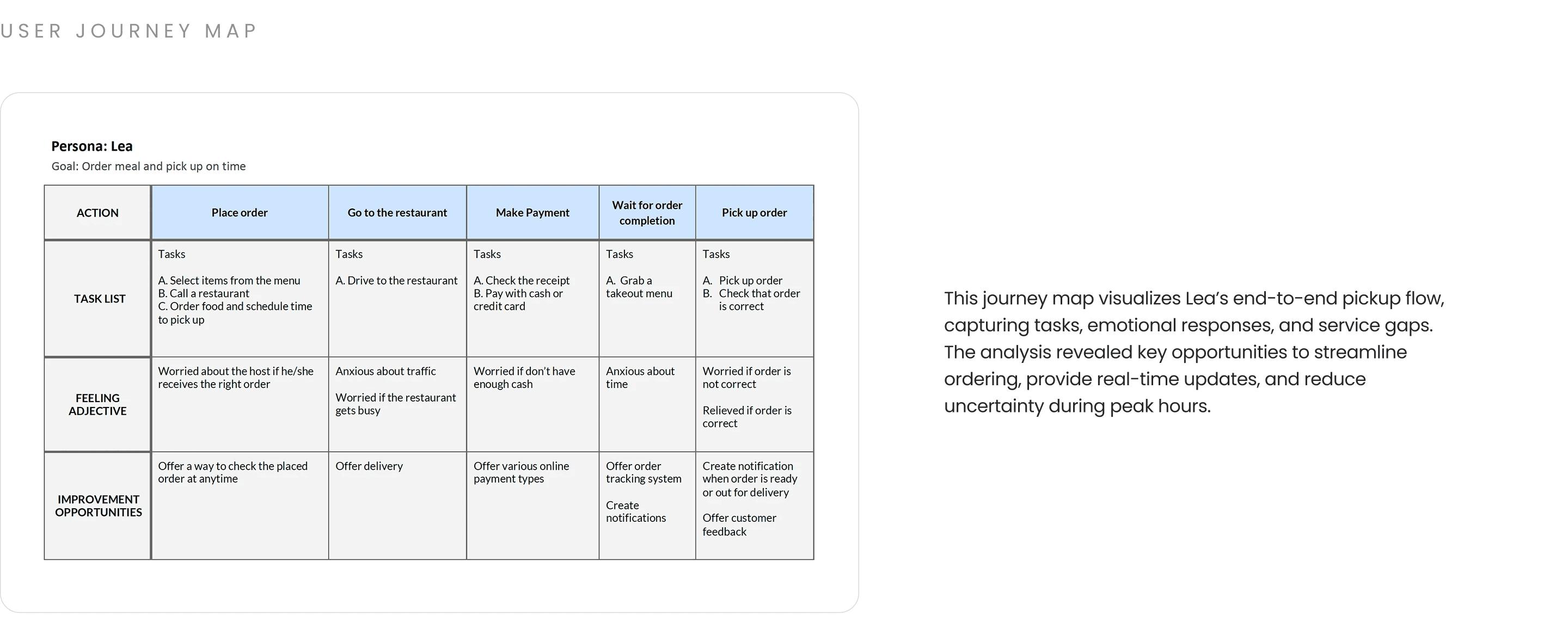
Creating personas helped synthesize research findings into representative user types, allowing common pain points to surface clearly. Insights revealed that busy customers often lack time for in-person pickup and are frustrated by limited delivery customization options in existing local platforms.
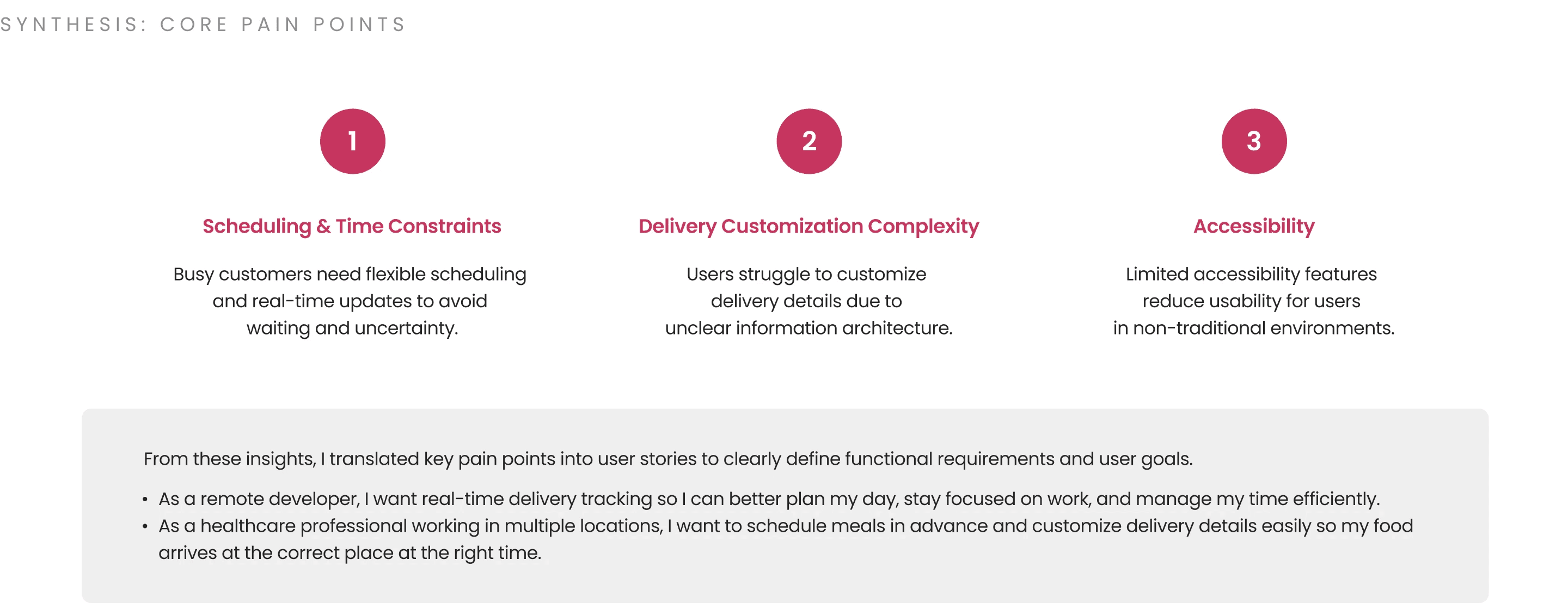
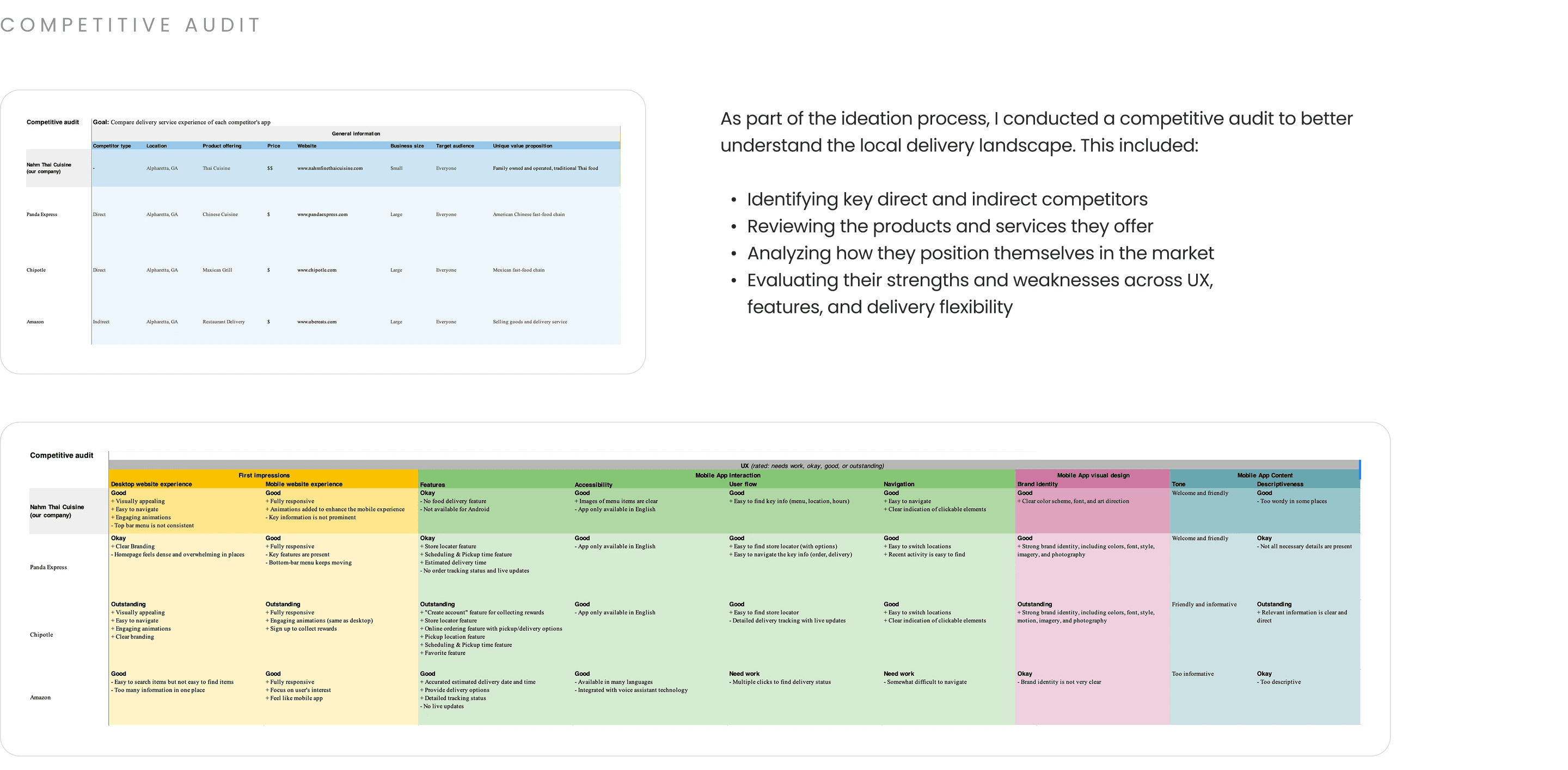
The audit revealed gaps in scheduling, customization, and UX, guiding a more flexible delivery strategy.
Concept Development
The concept development phase focused on translating research insights into a direction. A customer journey map and competitive analysis were used to better understand user pain points and market patterns, helping define opportunities for a more intuitive consumer experience.
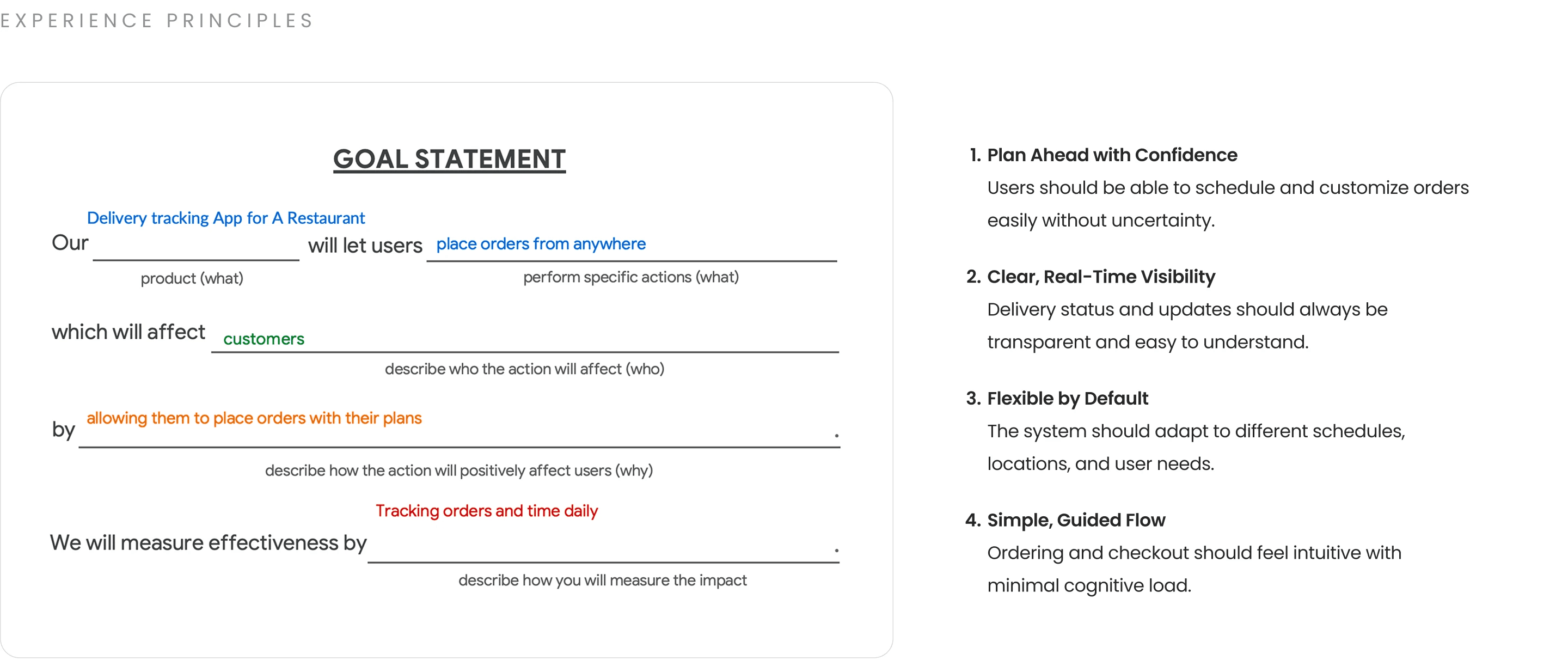
From this goal, I defined a set of experience principles to guide design decisions and ensure alignment with user needs.
Design Exploration
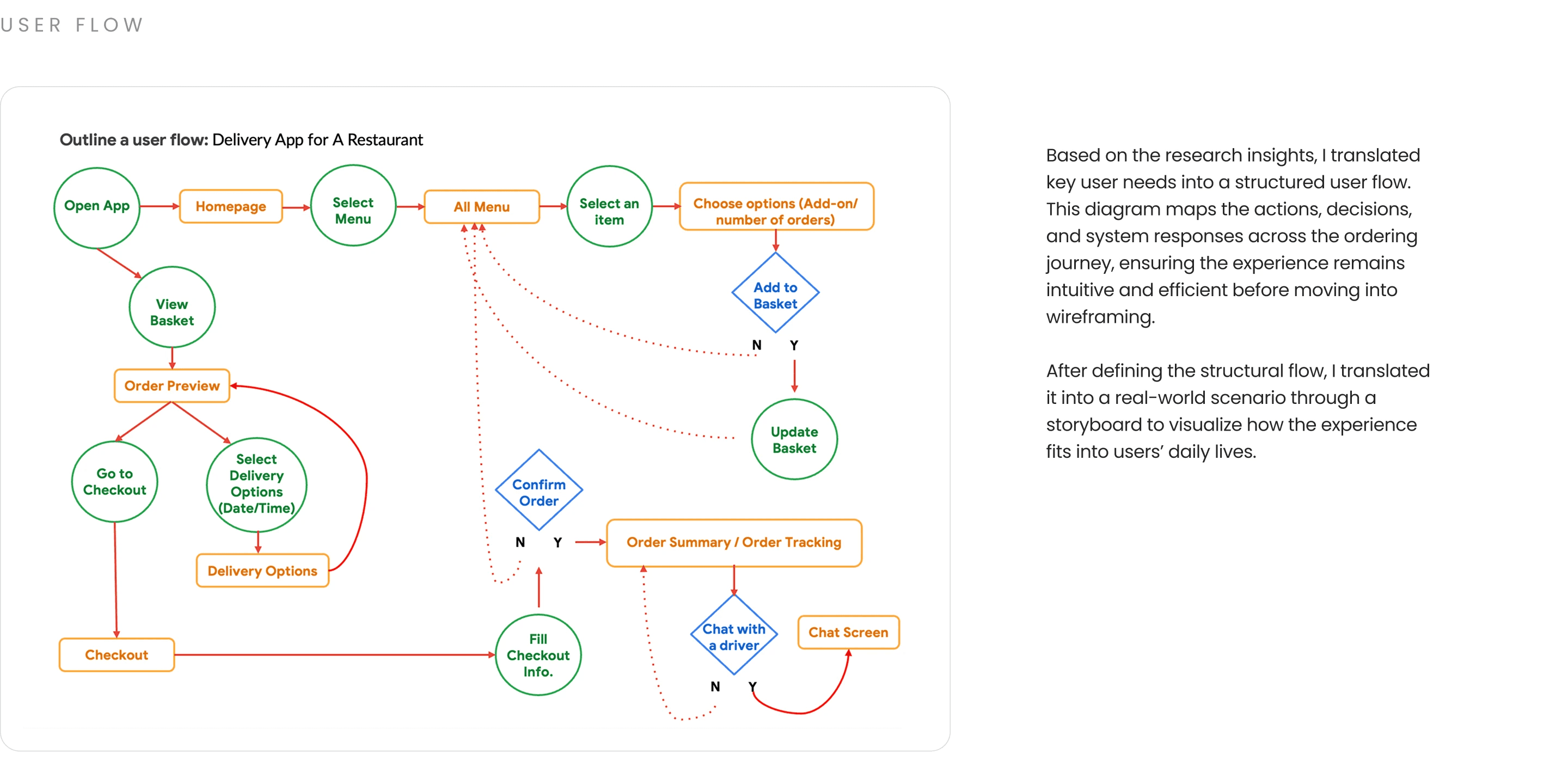
Following the concept direction, this phase focused on translating the delivery strategy into a clear interface structure and interaction flow.
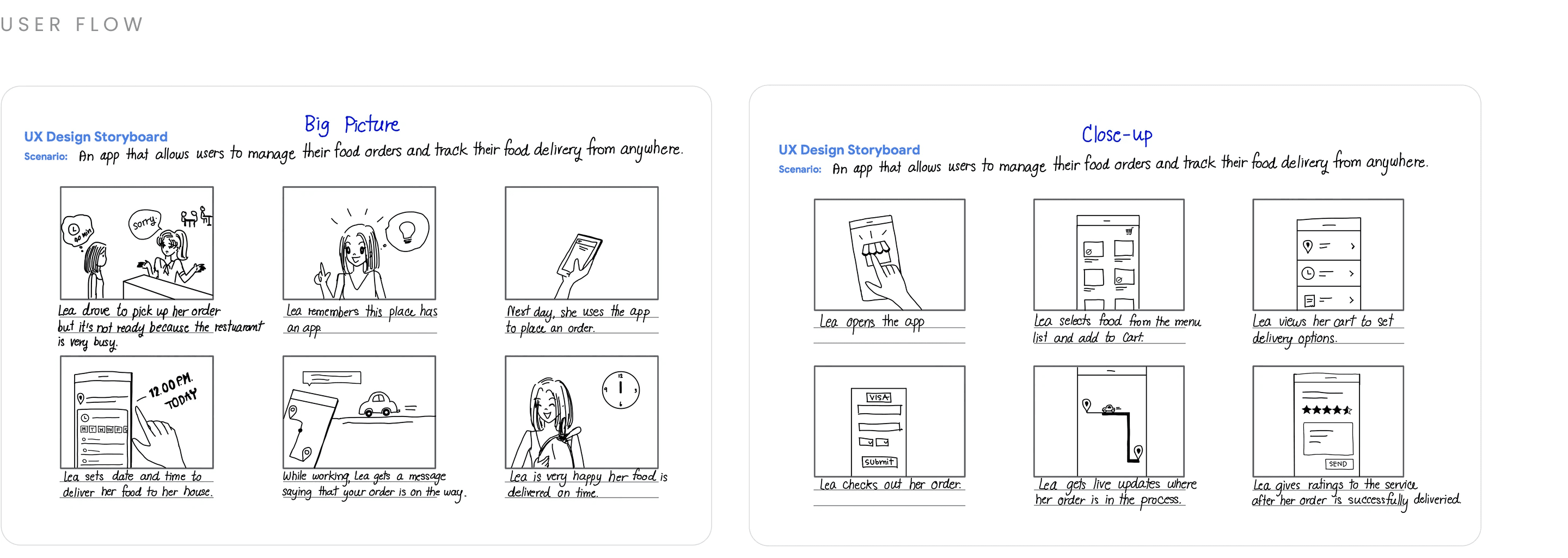
Storyboards, low fidelity sketches, and early prototypes were created to simulate key scenarios, from selecting a location and scheduling a delivery to confirming order details. This process tested how user inputs, timing logic, and system responses work together to
create a seamless scheduling experience.
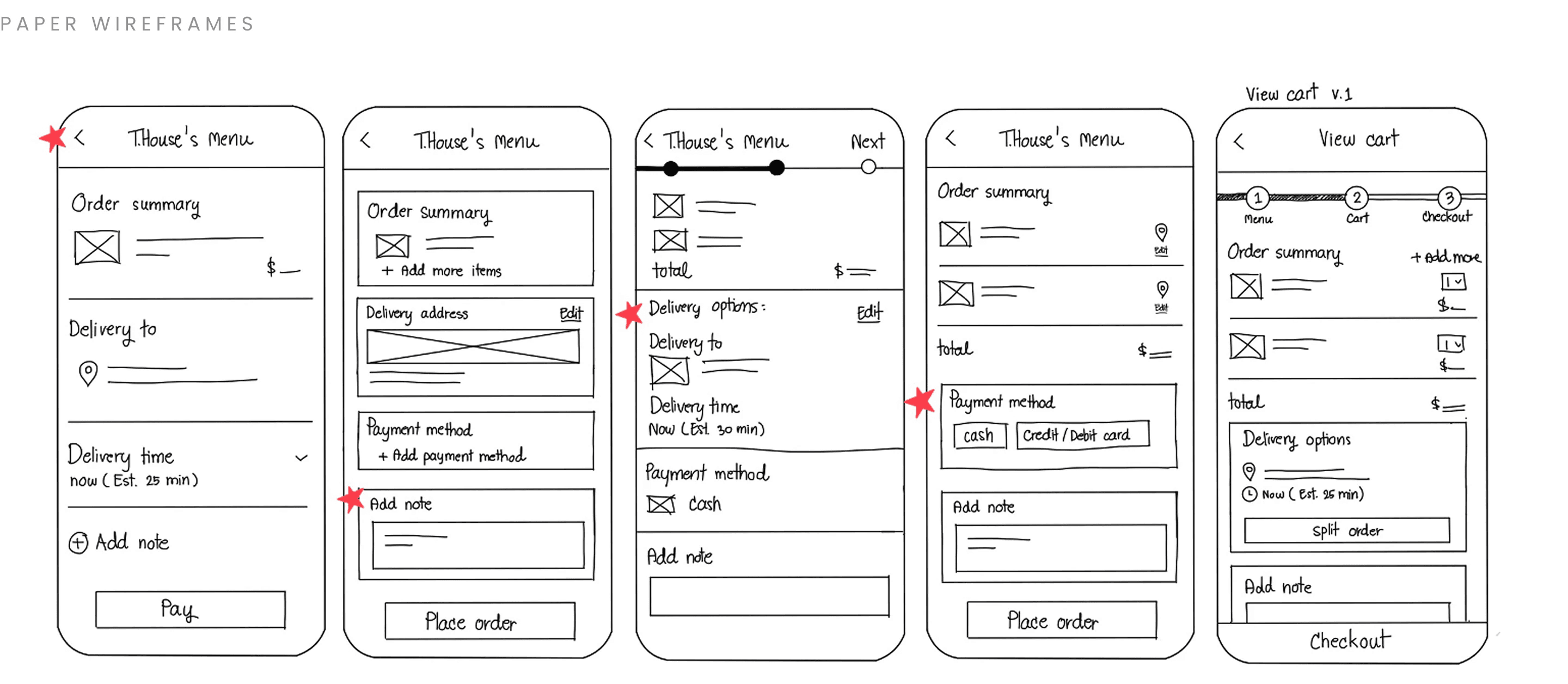
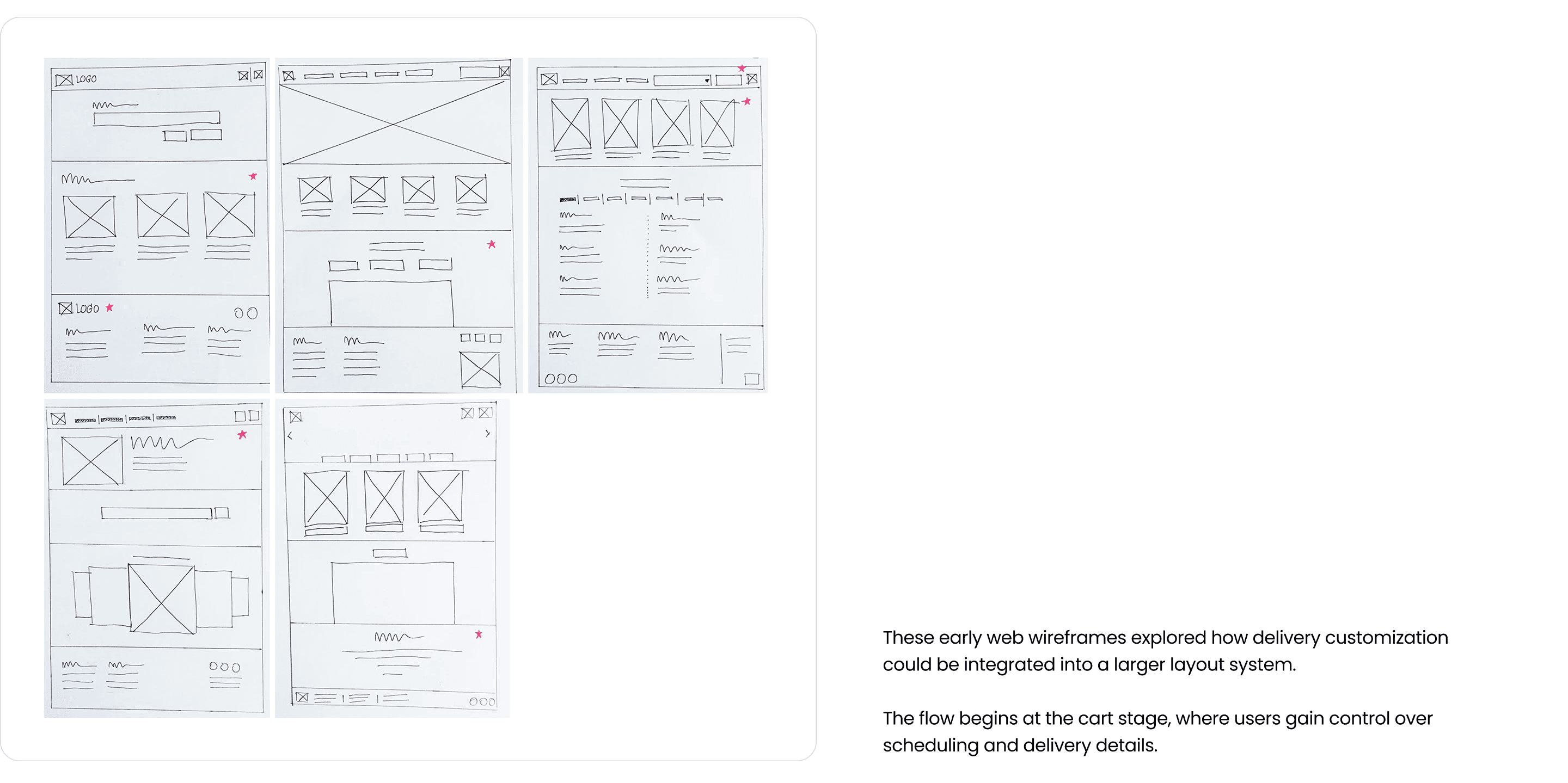
Initial sketches explored how delivery time, payment, and notes could be structured clearly within the order flow.
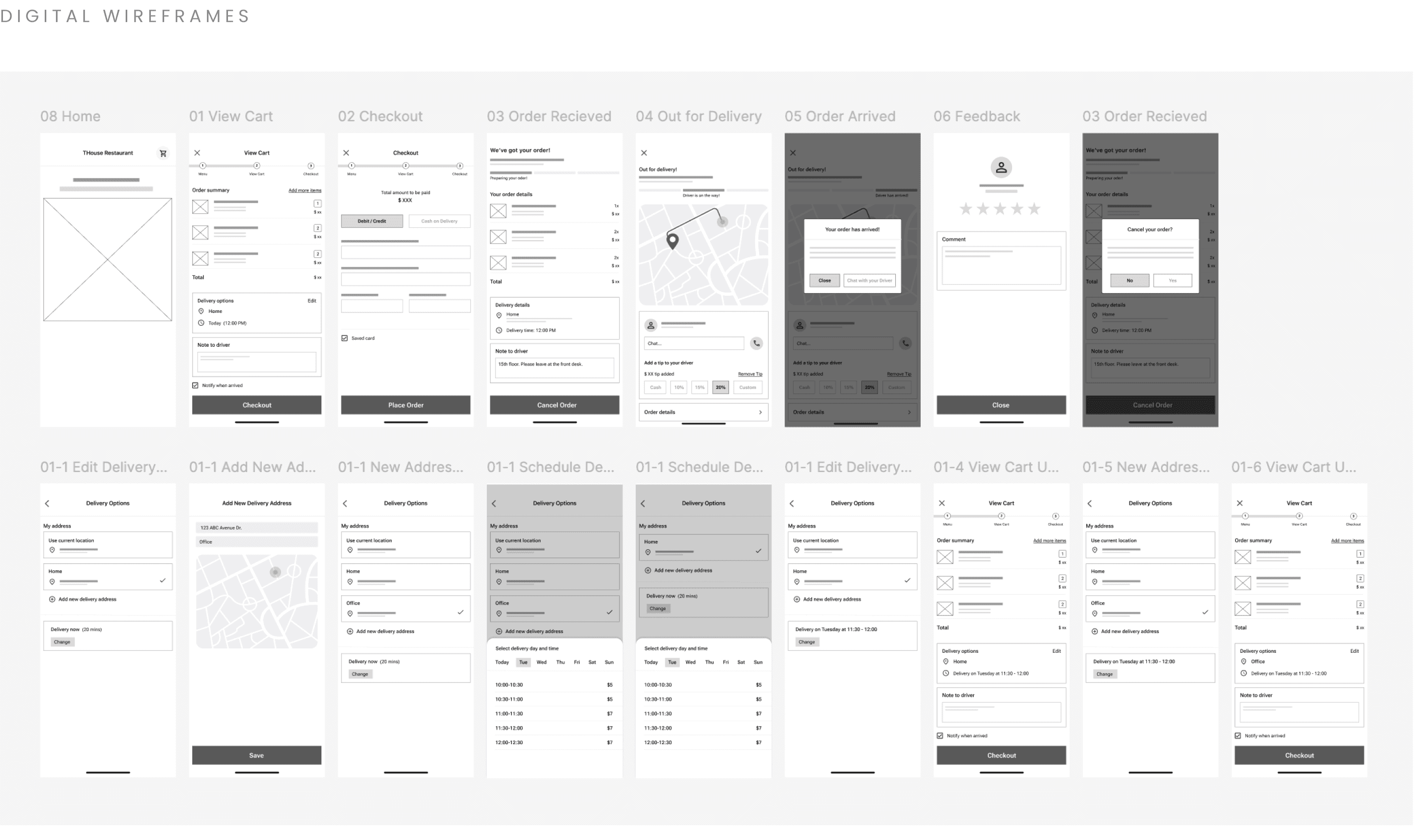
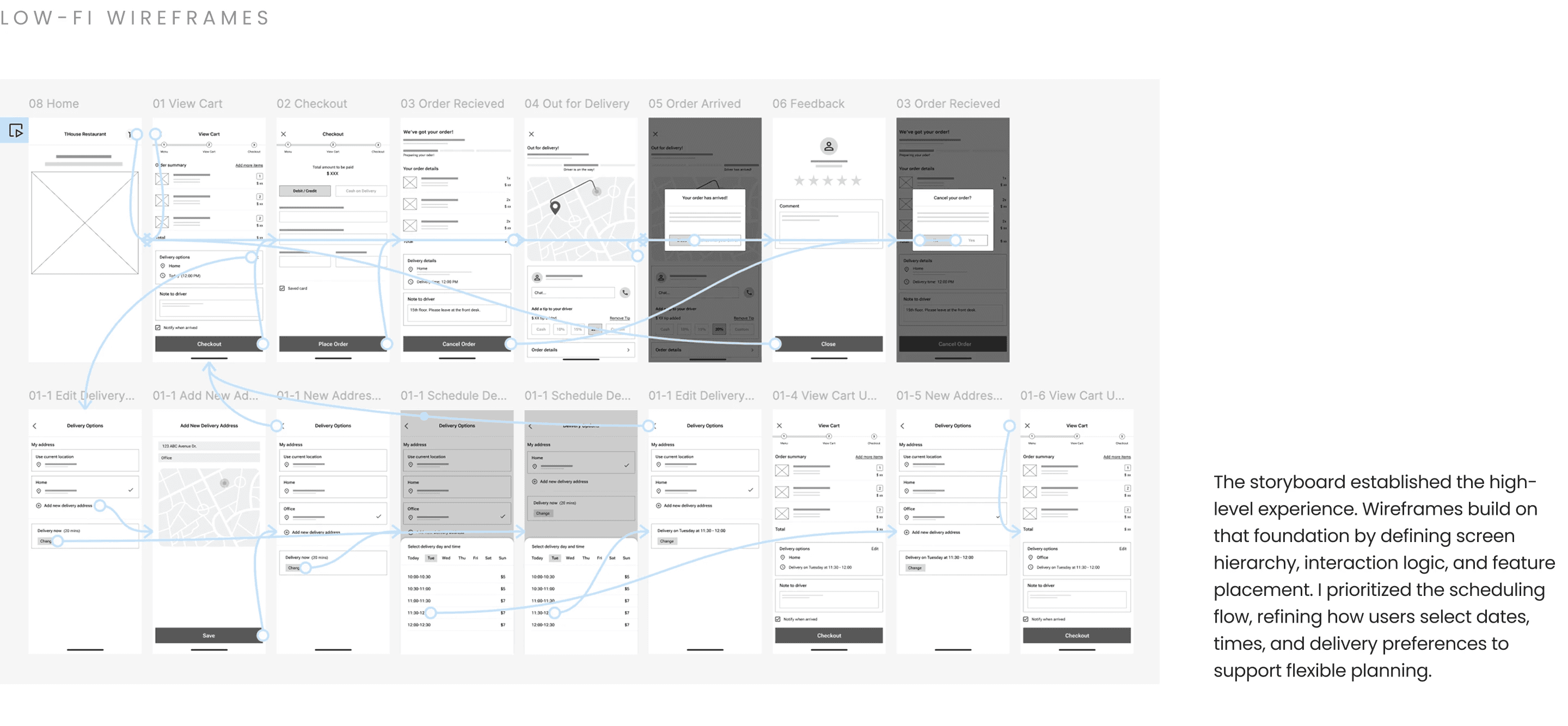
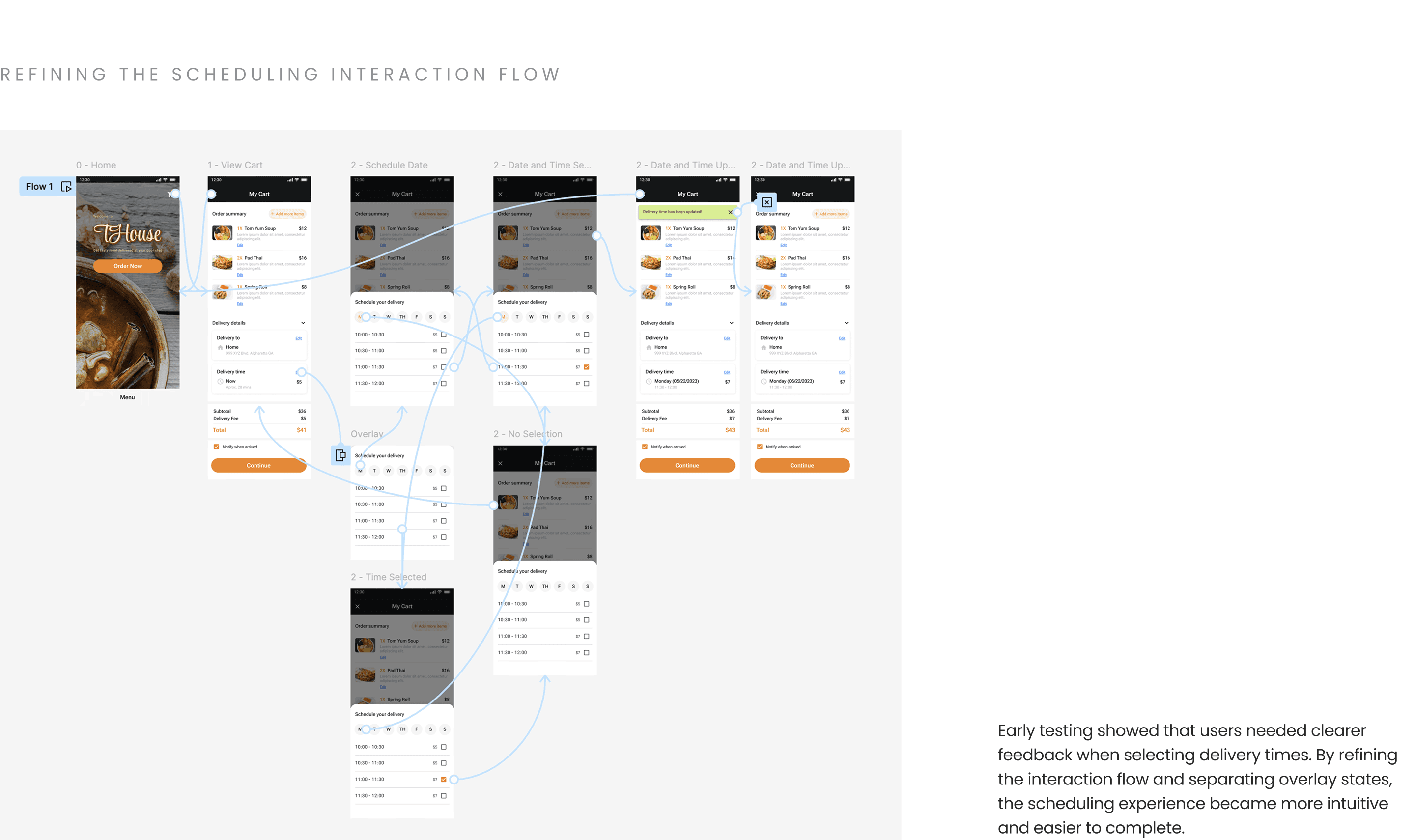
In this low-fidelity prototyping phase, I translated wireframes into a clickable prototype to test the end-to-end delivery and scheduling flow. This allowed me to validate navigation logic, interaction patterns, and decision points before investing in visual design.
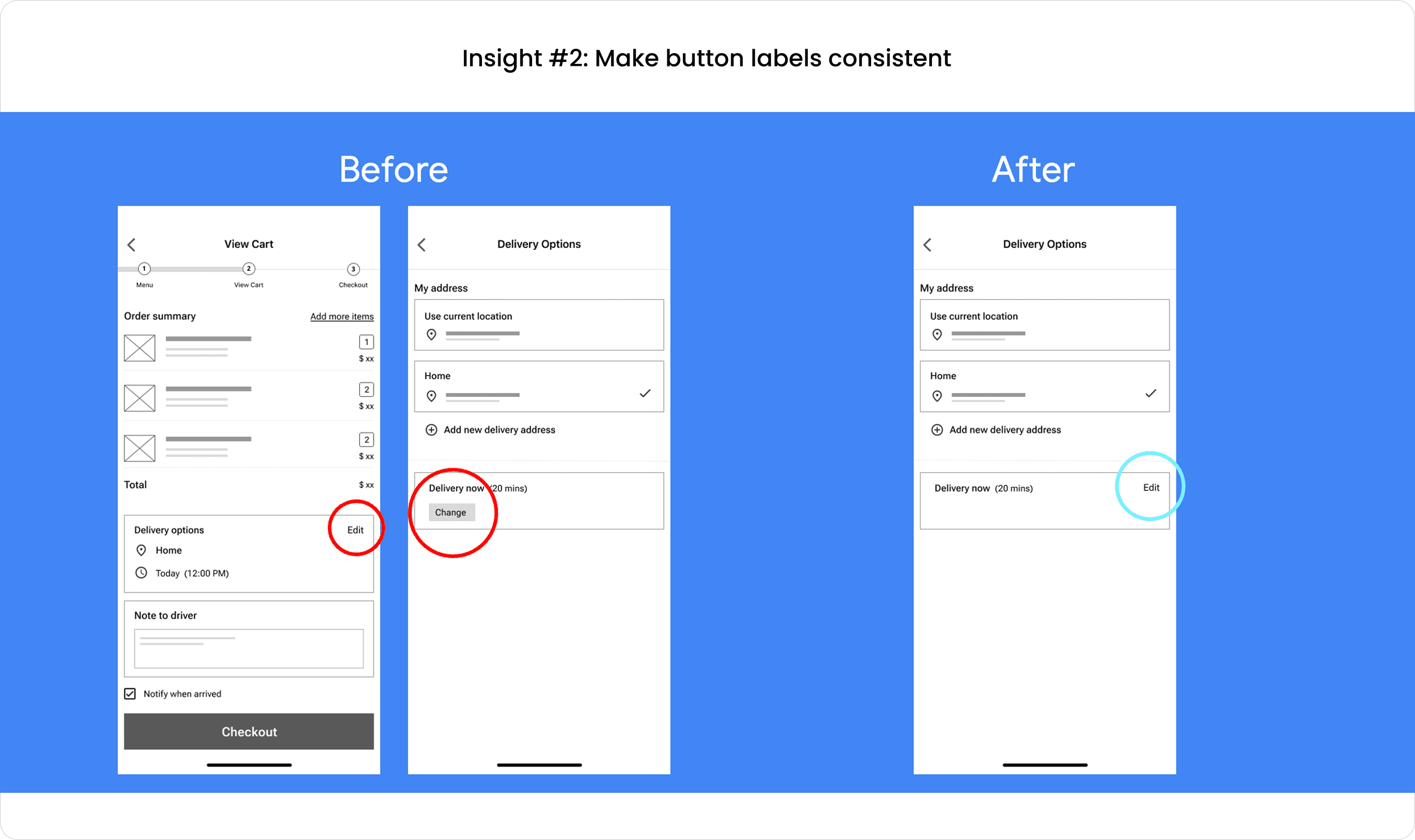
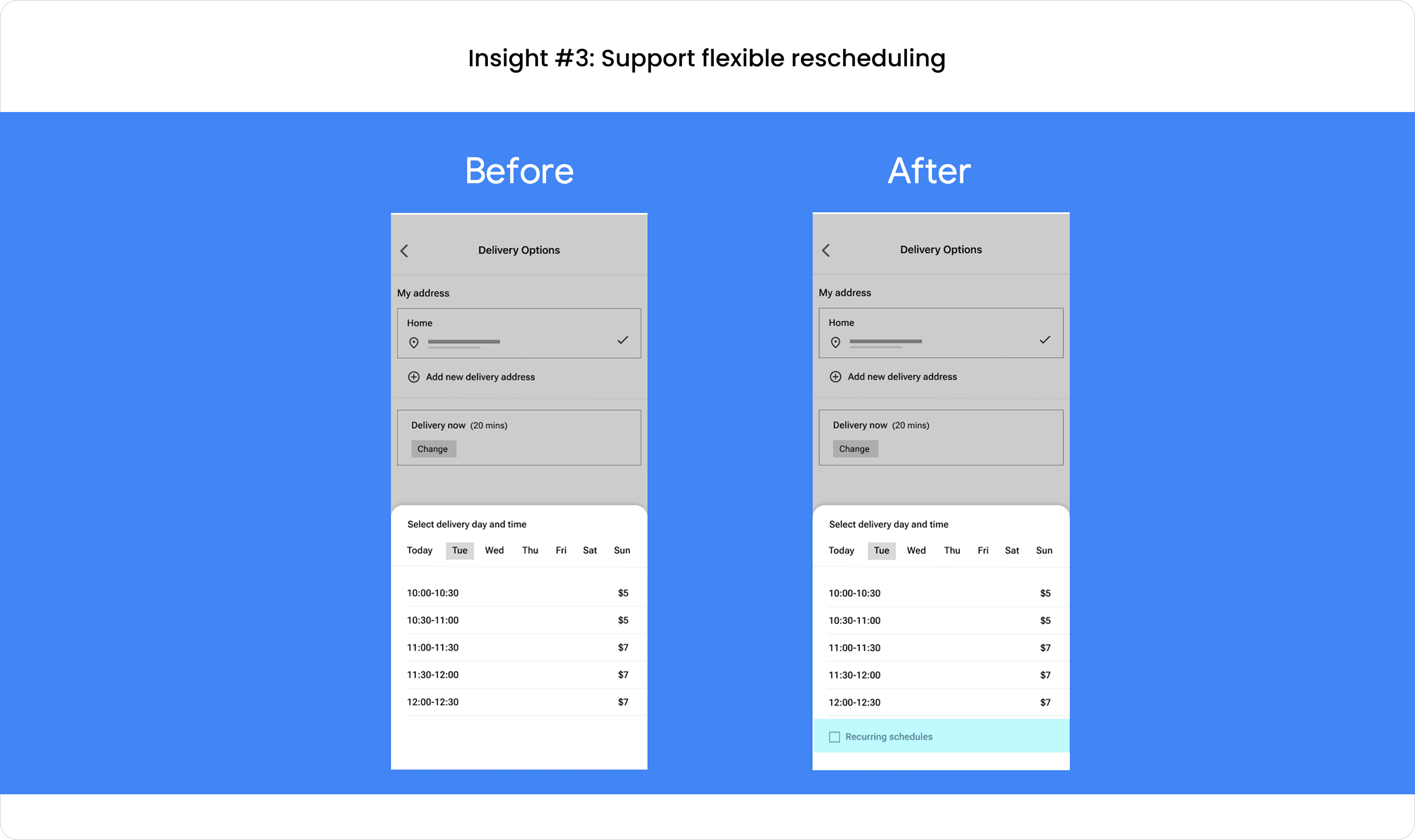
Early testing helped surface usability gaps and refine the structure, ensuring the core experience was intuitive and aligned with user expectations.
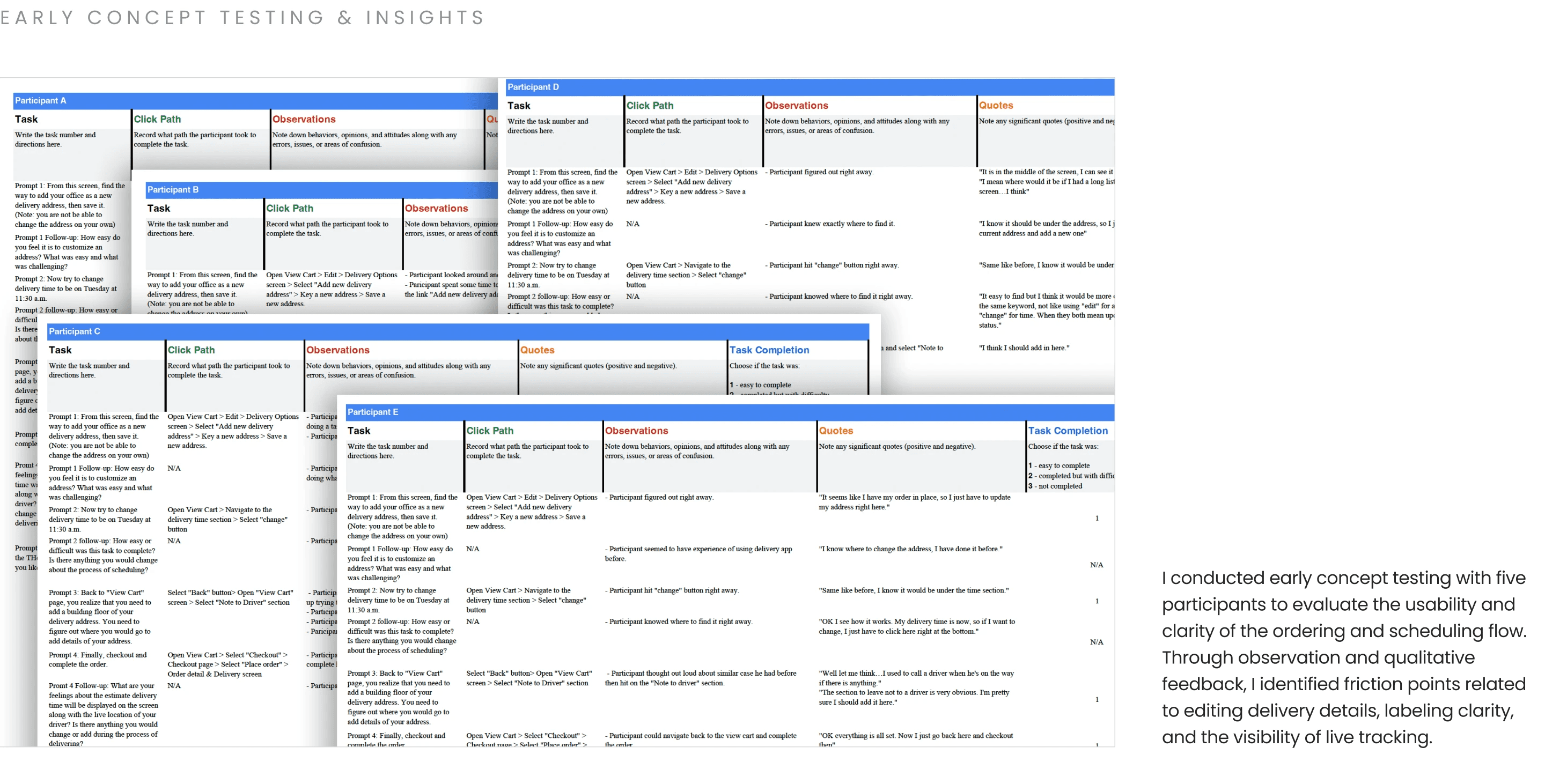
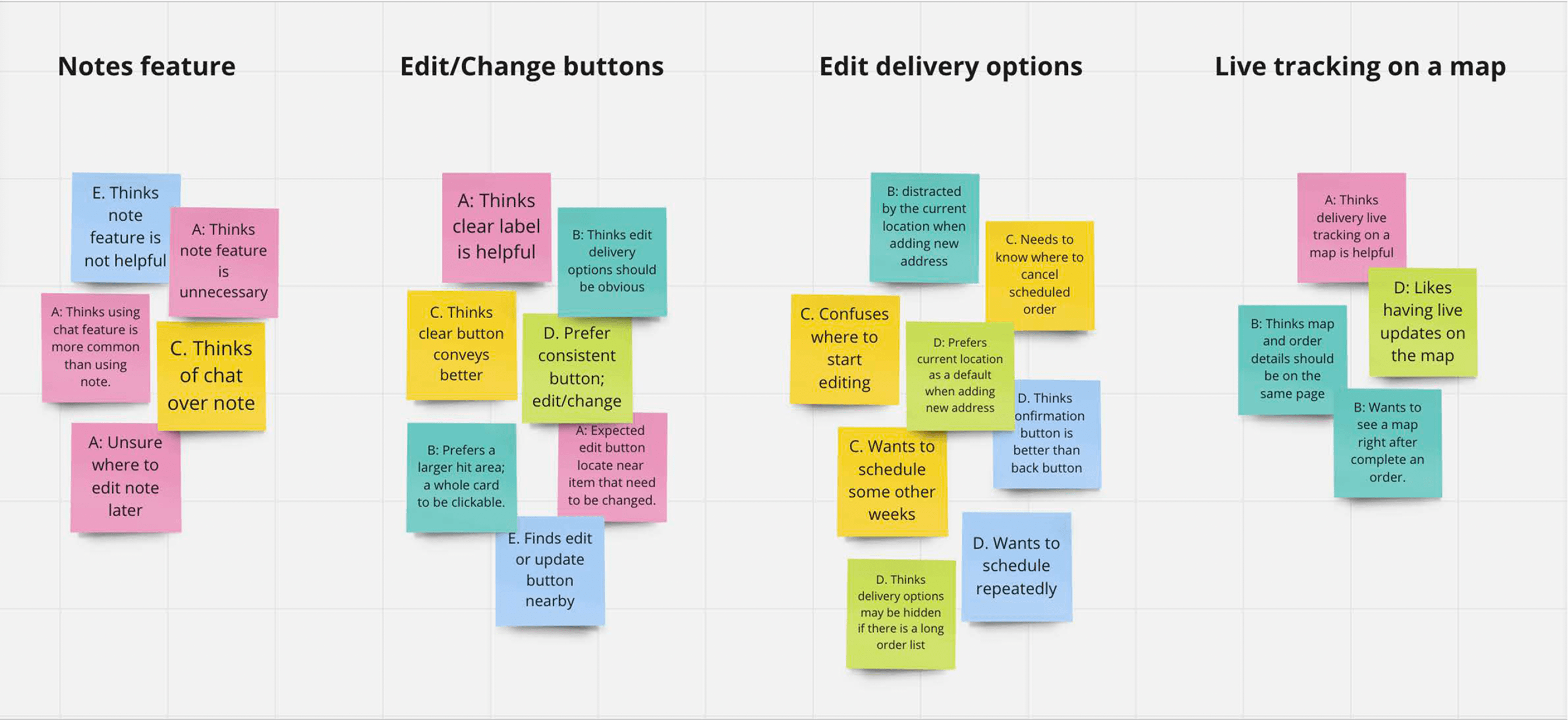
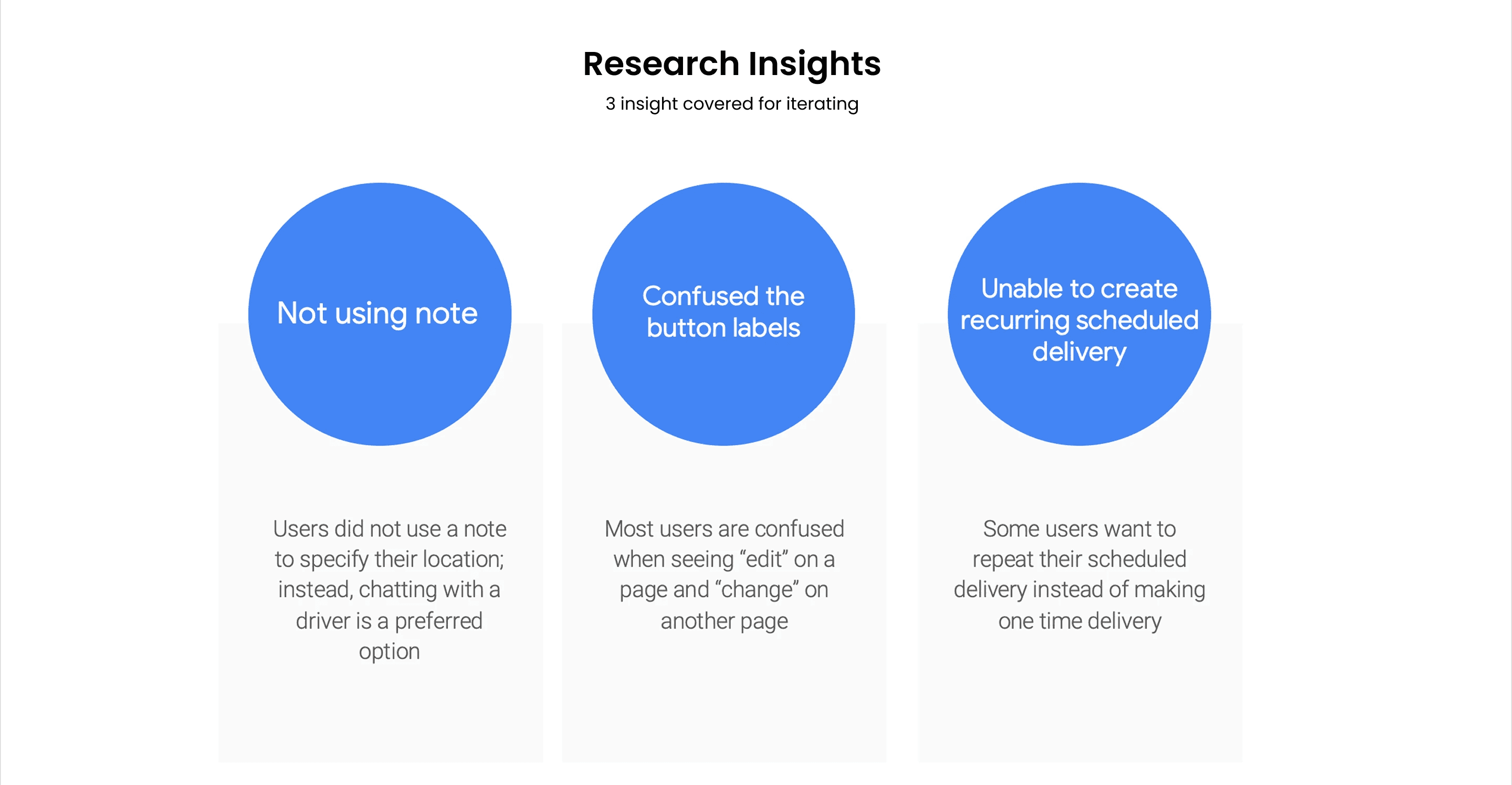
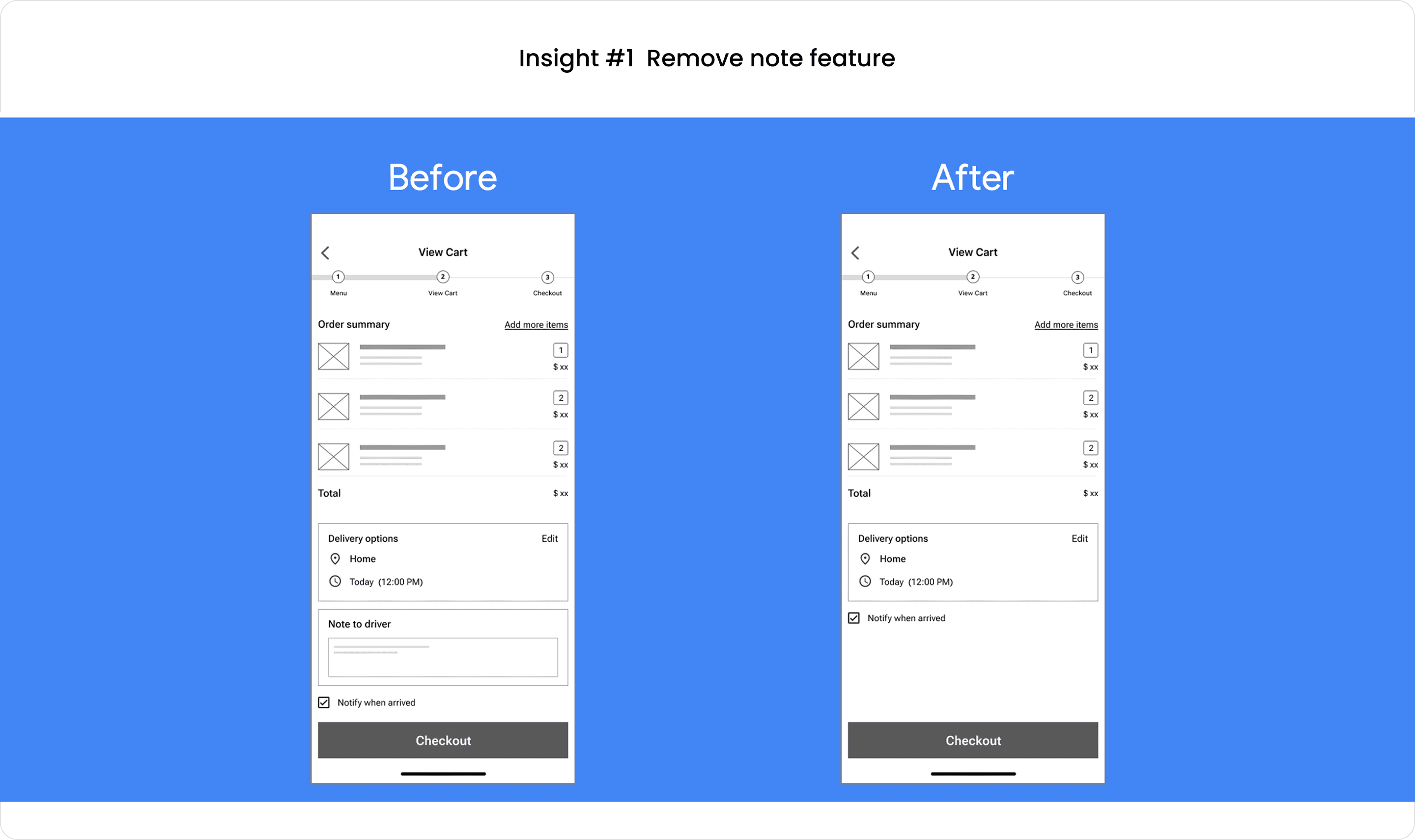
To synthesize the findings, I created an affinity diagram to group recurring themes, uncover patterns in user behavior, and prioritize key areas for refinement. This process allowed me to translate raw feedback into actionable design improvements before moving into higher-fidelity iterations.
Final Design
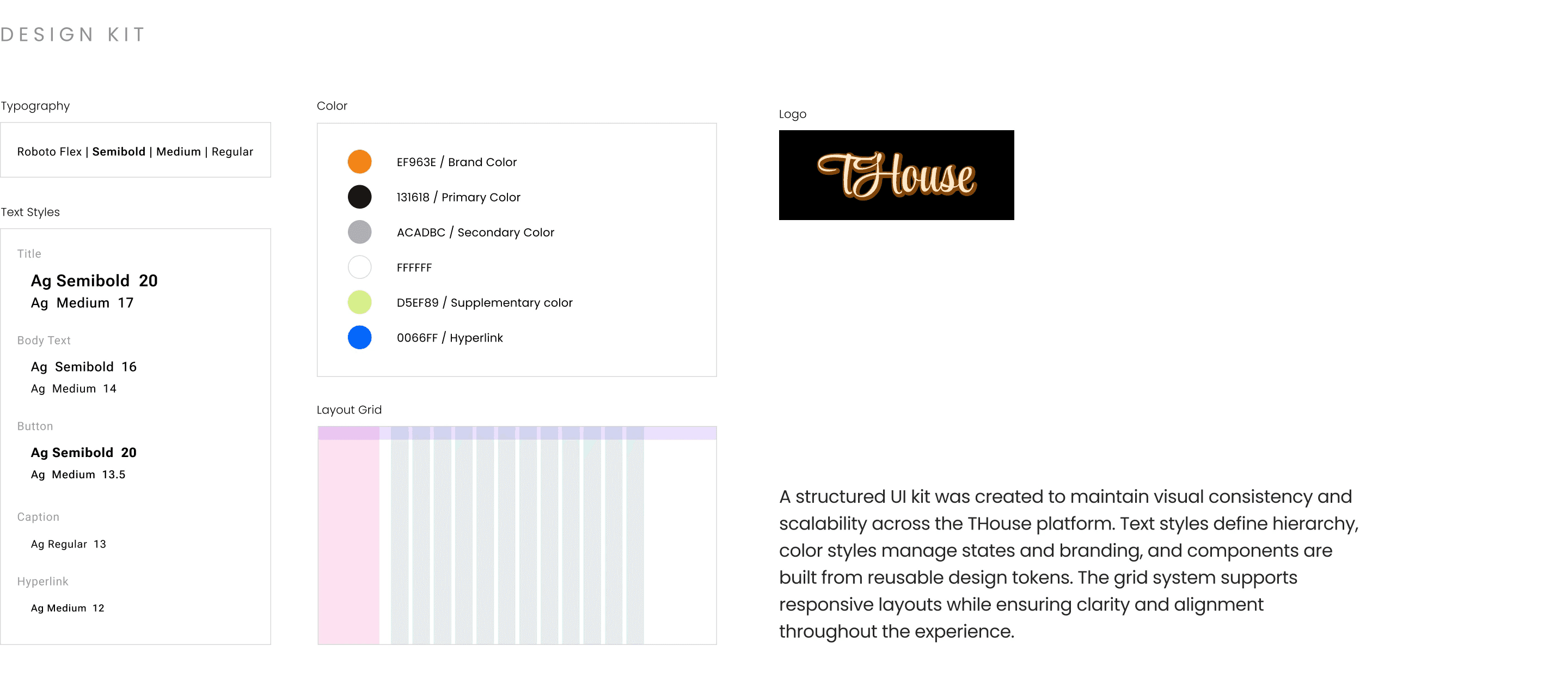
The final design focused on enhancing flexibility, clarity, and delivery transparency. The interface was refined to create a seamless connection between order placement, scheduling, and real-time tracking.
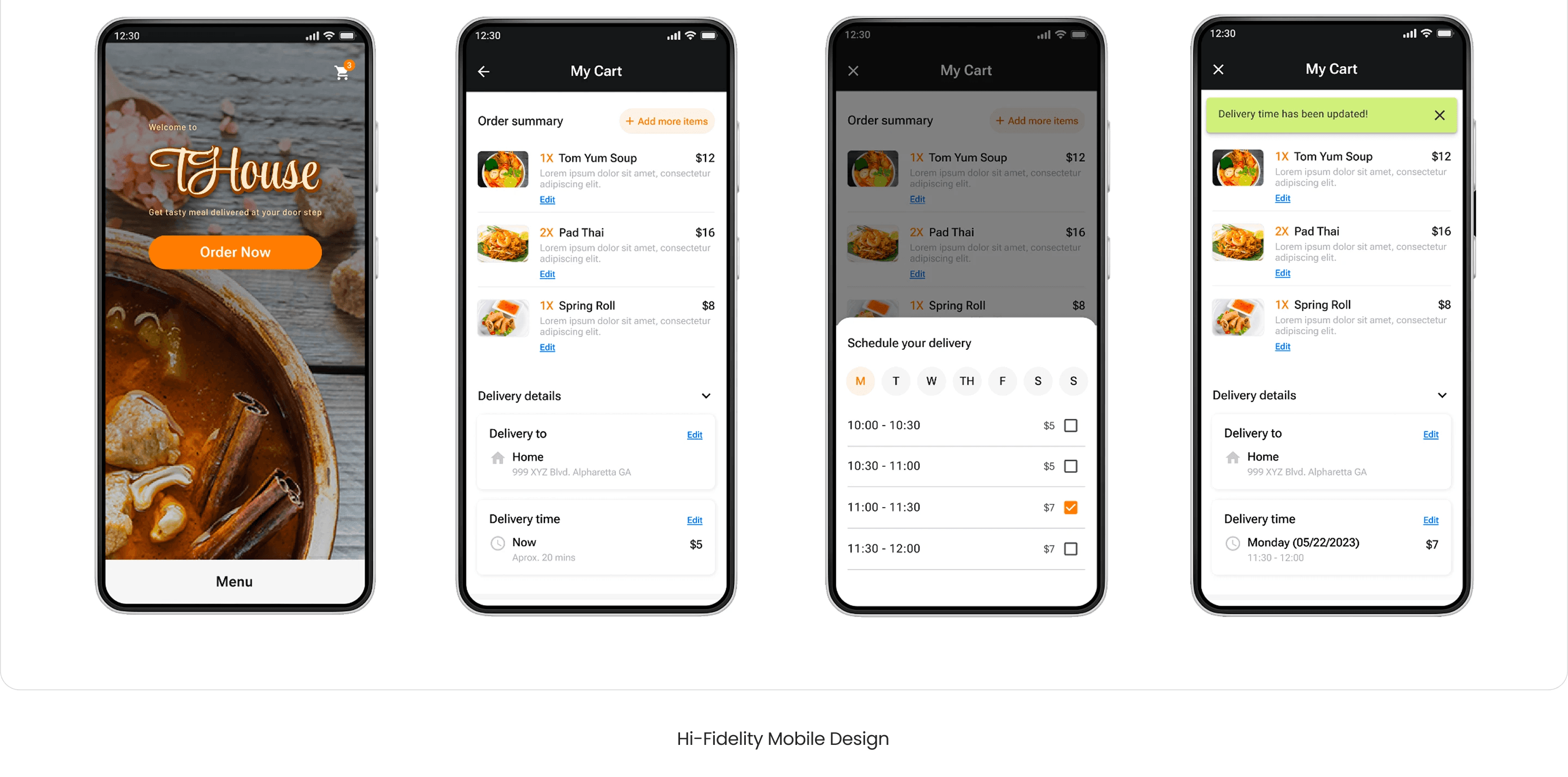
This phase emphasized intuitive navigation, clear delivery customization options, and live status visibility to support busy users managing dynamic schedules. By simplifying the scheduling flow and improving edit/change interactions, the experience feels efficient, predictable, and aligned with everyday planning needs.
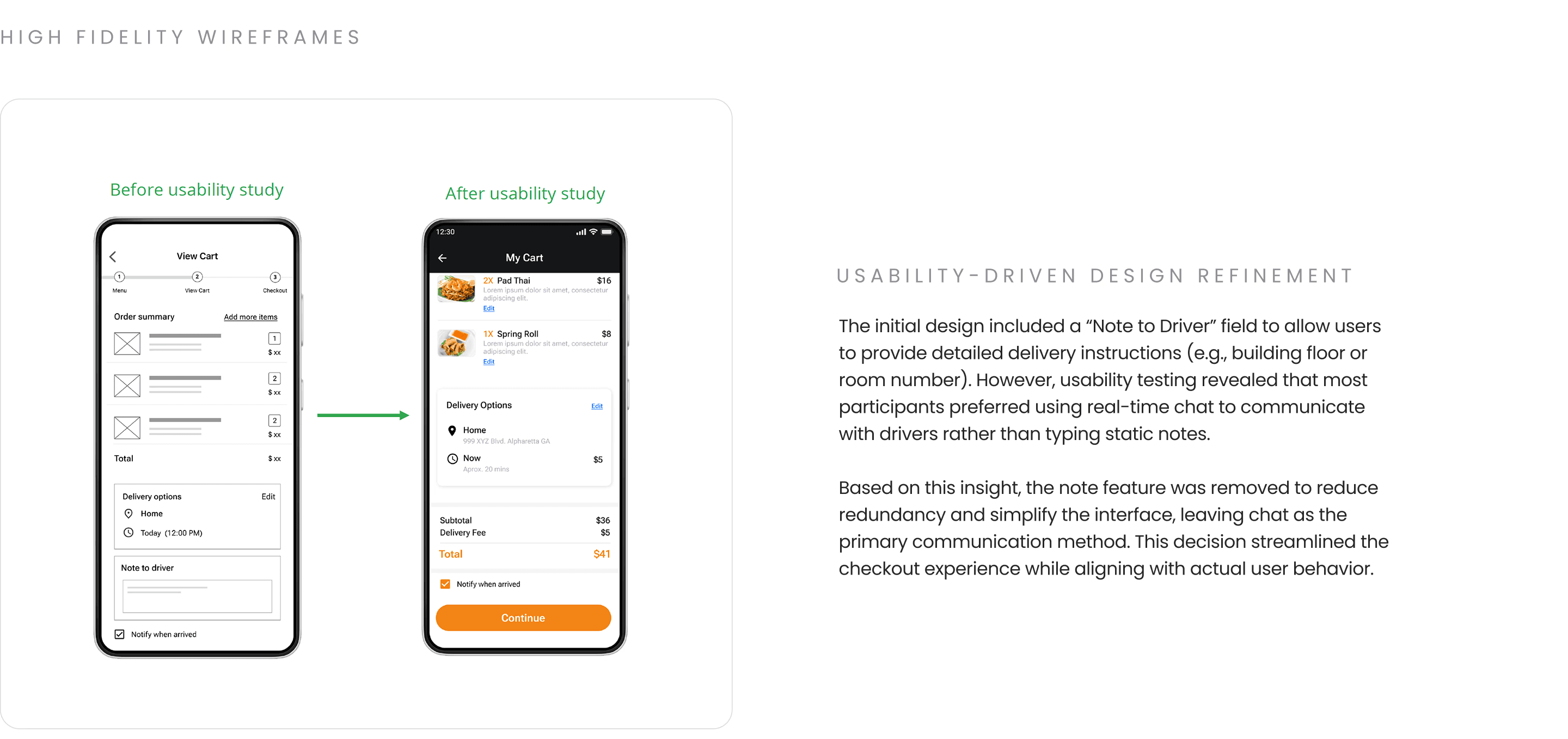
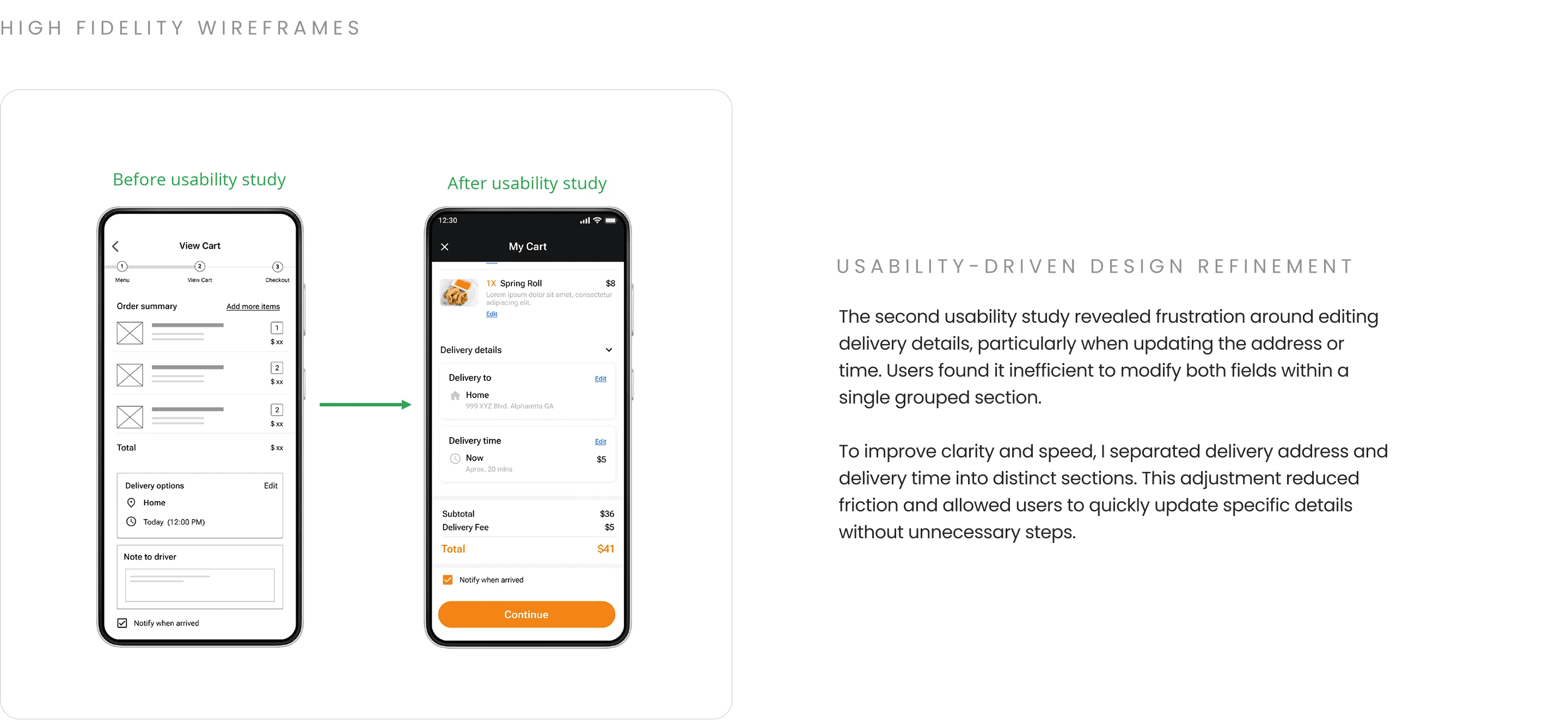
Delivery customization and time selection are integrated directly within the cart to reduce friction during checkout.
Extending the Experience to Web
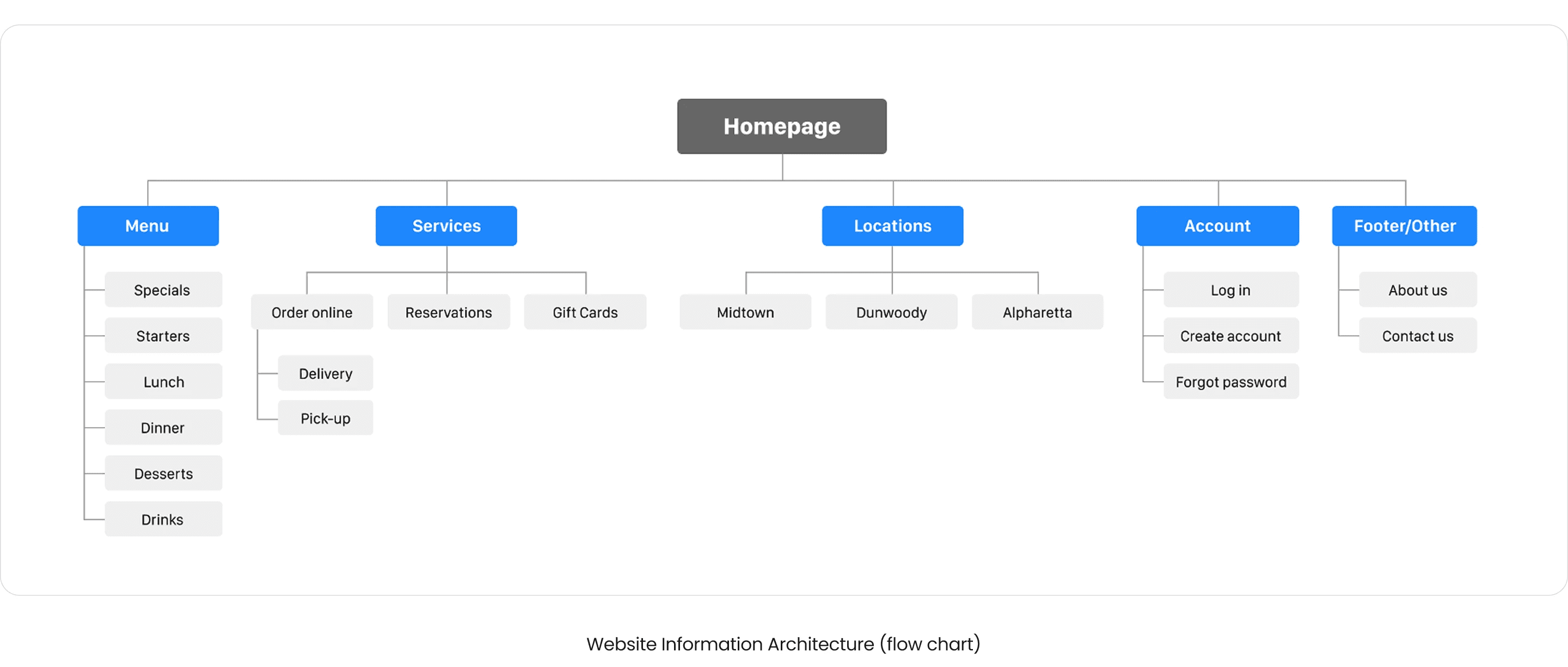
After defining the mobile experience, the next phase focused on extending the delivery system to a responsive website that supports discovery, planning, and multi-location access.
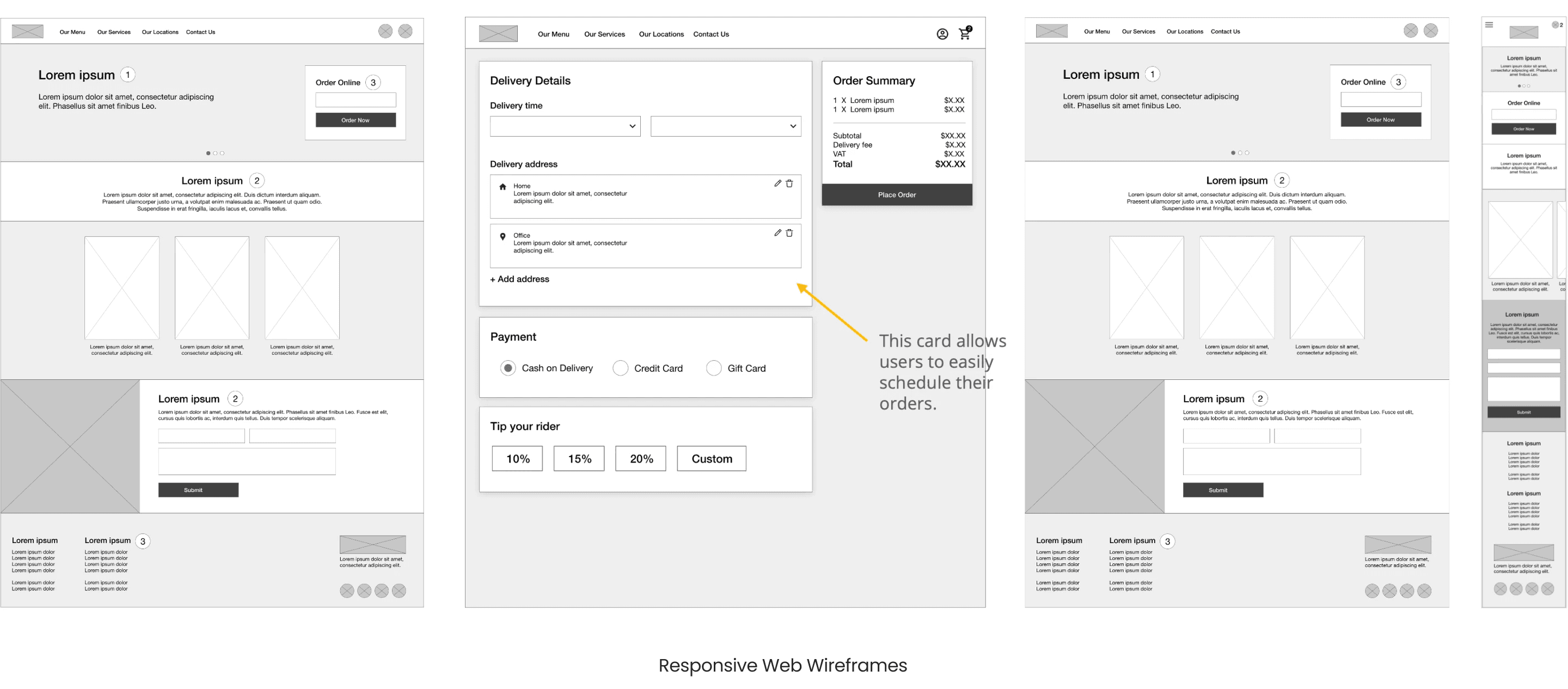
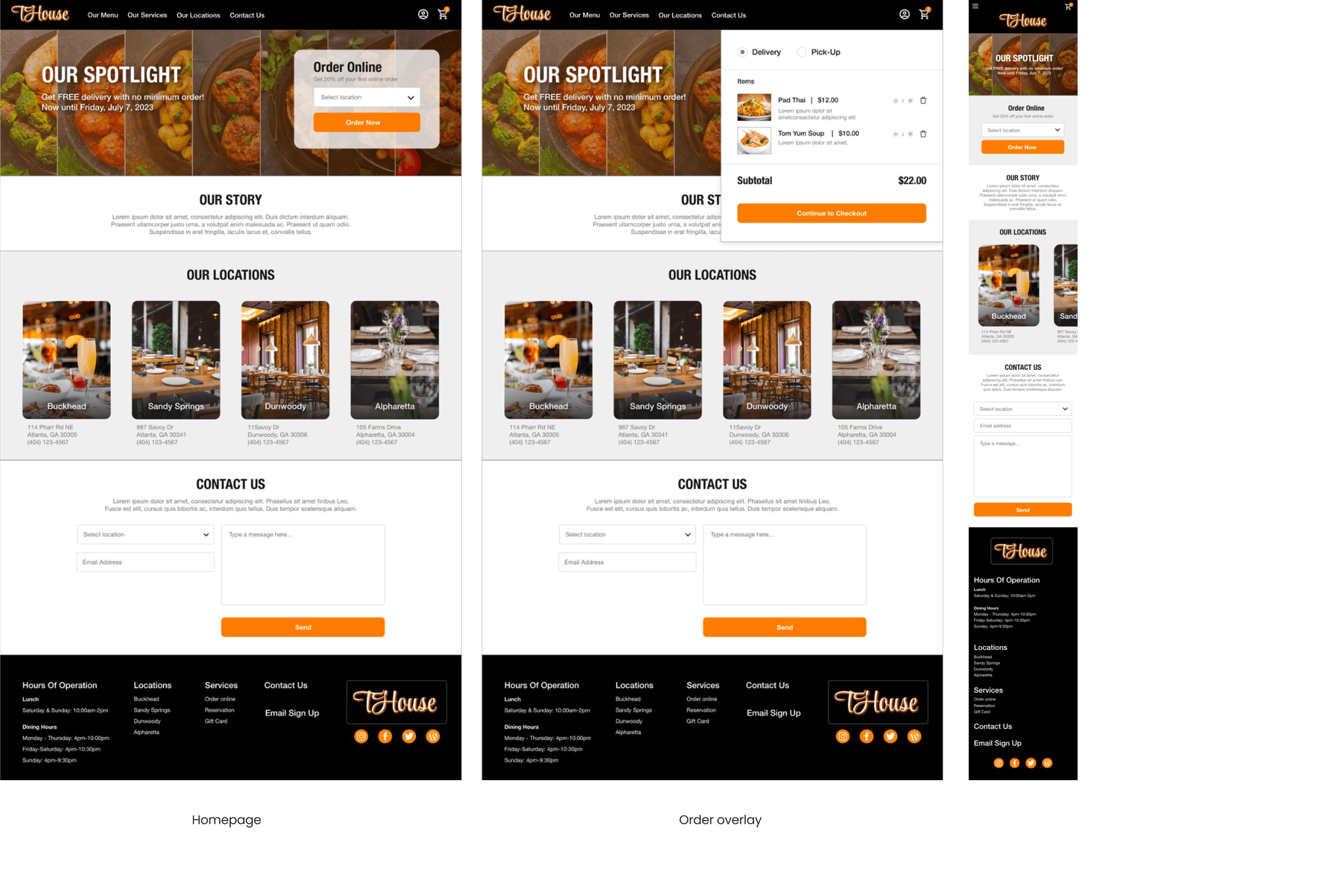
Responsive Web – Final Design Delivery customization and time selection are integrated directly within the cart to reduce friction during checkout.
Tool Used
Figma ✦ Adobe XD ✦ InVision