The Grocery Store 2.0
Enhancing the In-Store Grocery Shopping Experience
UX Research
Service Design
Retail Experience
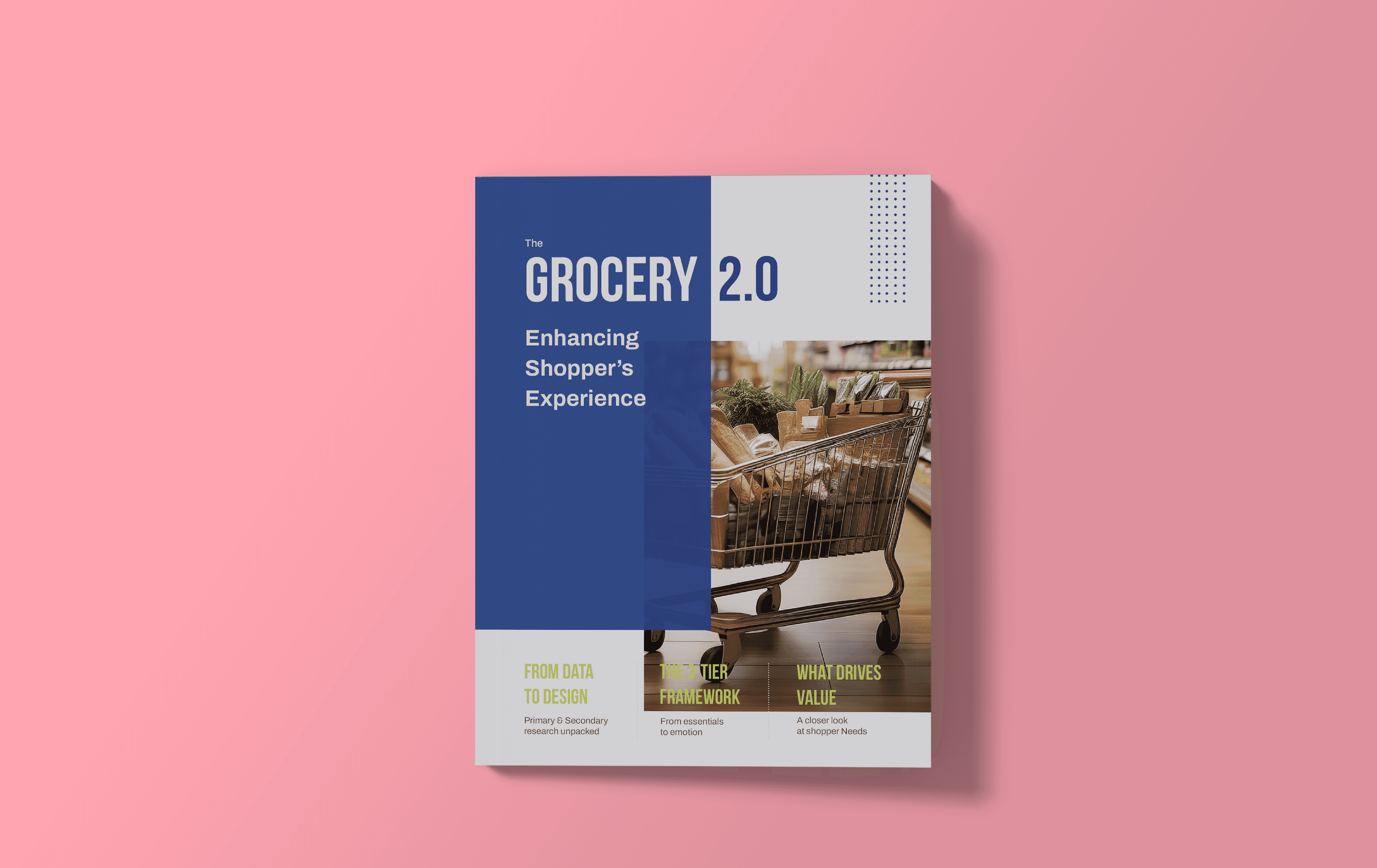
Project Overview
The Grocery Store 2.0 is a research-driven UX project exploring how in-store grocery shopping can be improved through better navigation, clearer information, and supportive digital touchpoints. The project combines primary and secondary research, including field observations, customer data analysis, and industry research, to understand real shopper behaviors, pain points, and expectations within physical grocery environments. Insights from this research were synthesized into journey maps and opportunity areas that highlight where experience design and technology can reduce friction, improve efficiency, and enhance the overall in-store shopping experience.
Client
Academic Project (SCAD)
Duration
5 Weeks
Role
UX Designer
Problem
Despite advances in retail technology, in-store grocery shopping often remains time-consuming and frustrating. Shoppers struggle with navigation, unclear product information, long checkout times, and inconsistent digital support, while retailers face challenges balancing efficiency, staffing, and customer satisfaction.
UX Designer (Team Project)
I contributed across the full UX process, with a primary focus on research, synthesis, and experience framing. My work included conducting and synthesizing both primary and secondary research, identifying key pain points, and shaping insights into a structured framework. I also supported concept development and led the visual layout and storytelling of the final framework and magazine, ensuring our findings and proposed directions were communicated clearly and cohesively.
Deliverables
Primary Research & secondary Research
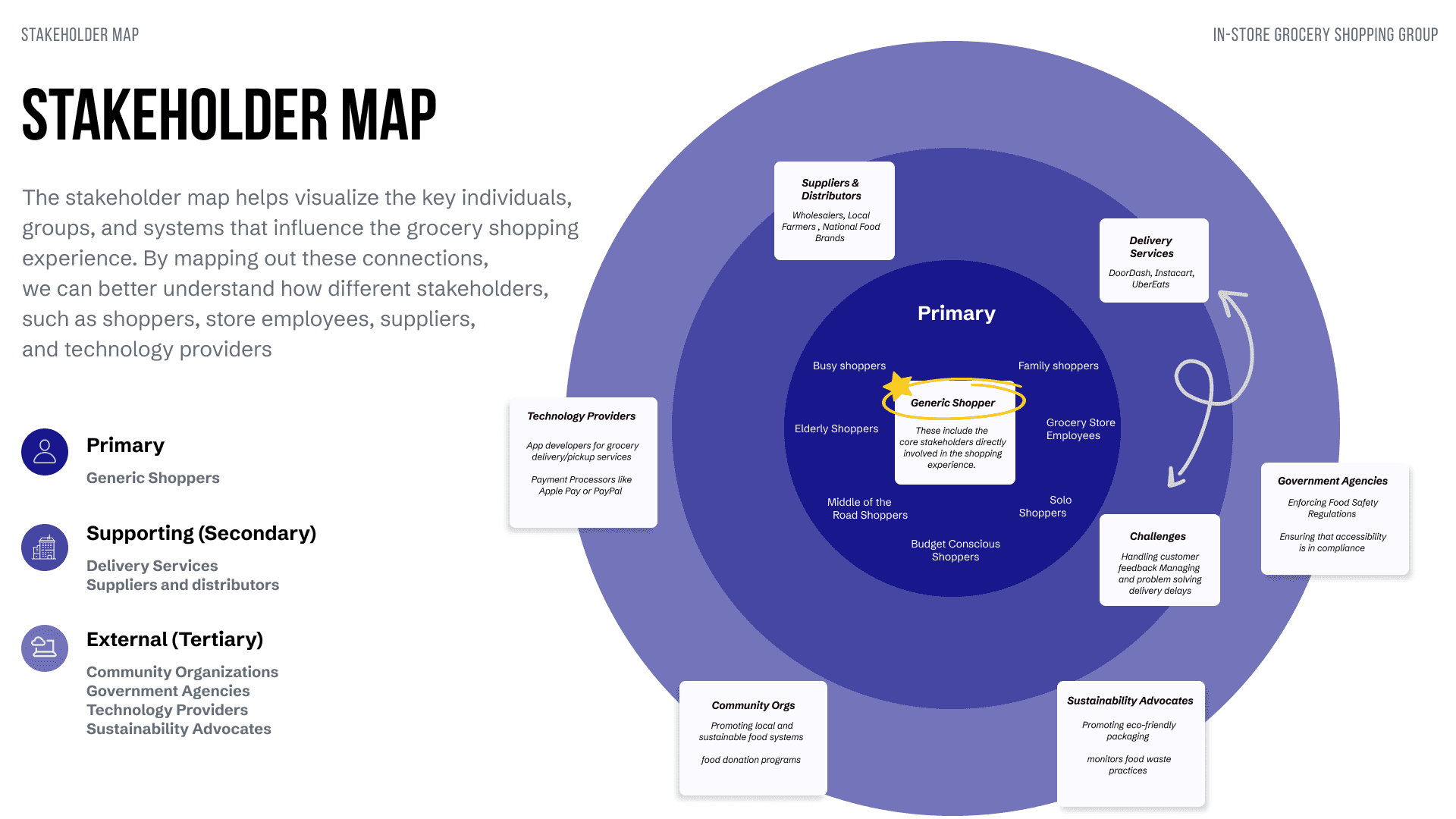
Stakeholder Map
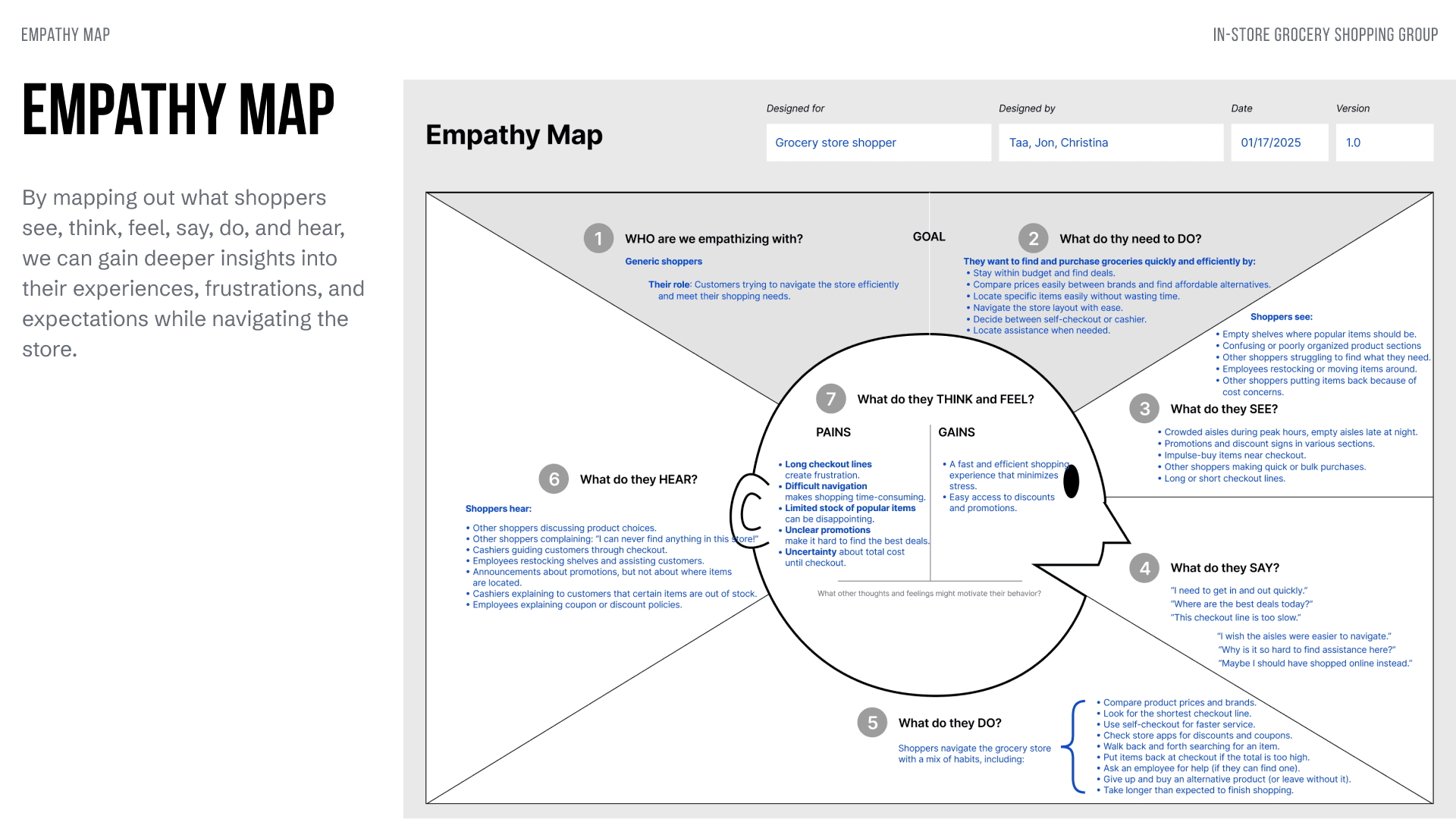
Empathy Map
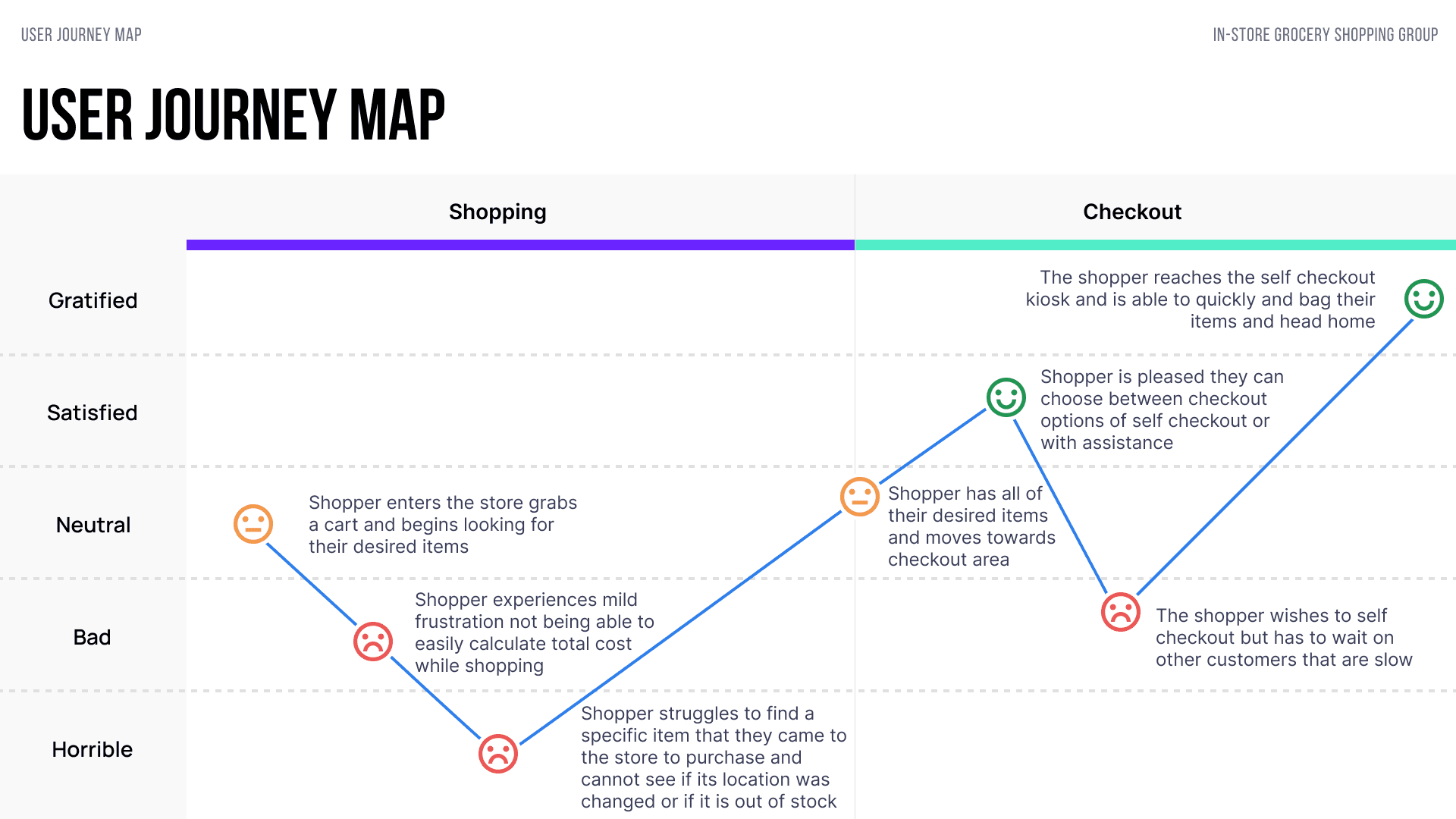
User Journey Map
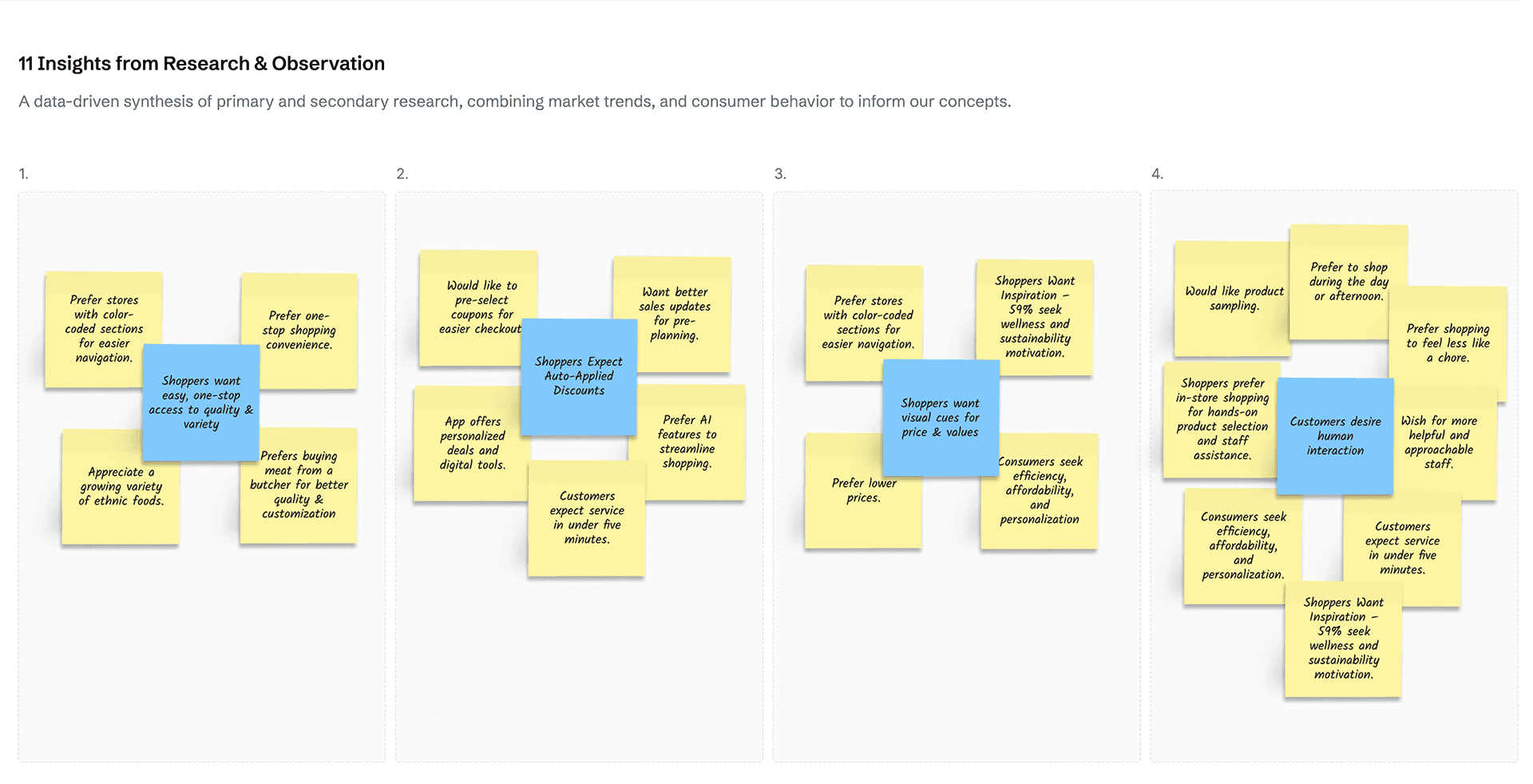
Research framework & insight synthesis
Conceptual solution directions
Process
Research & Data Gathering
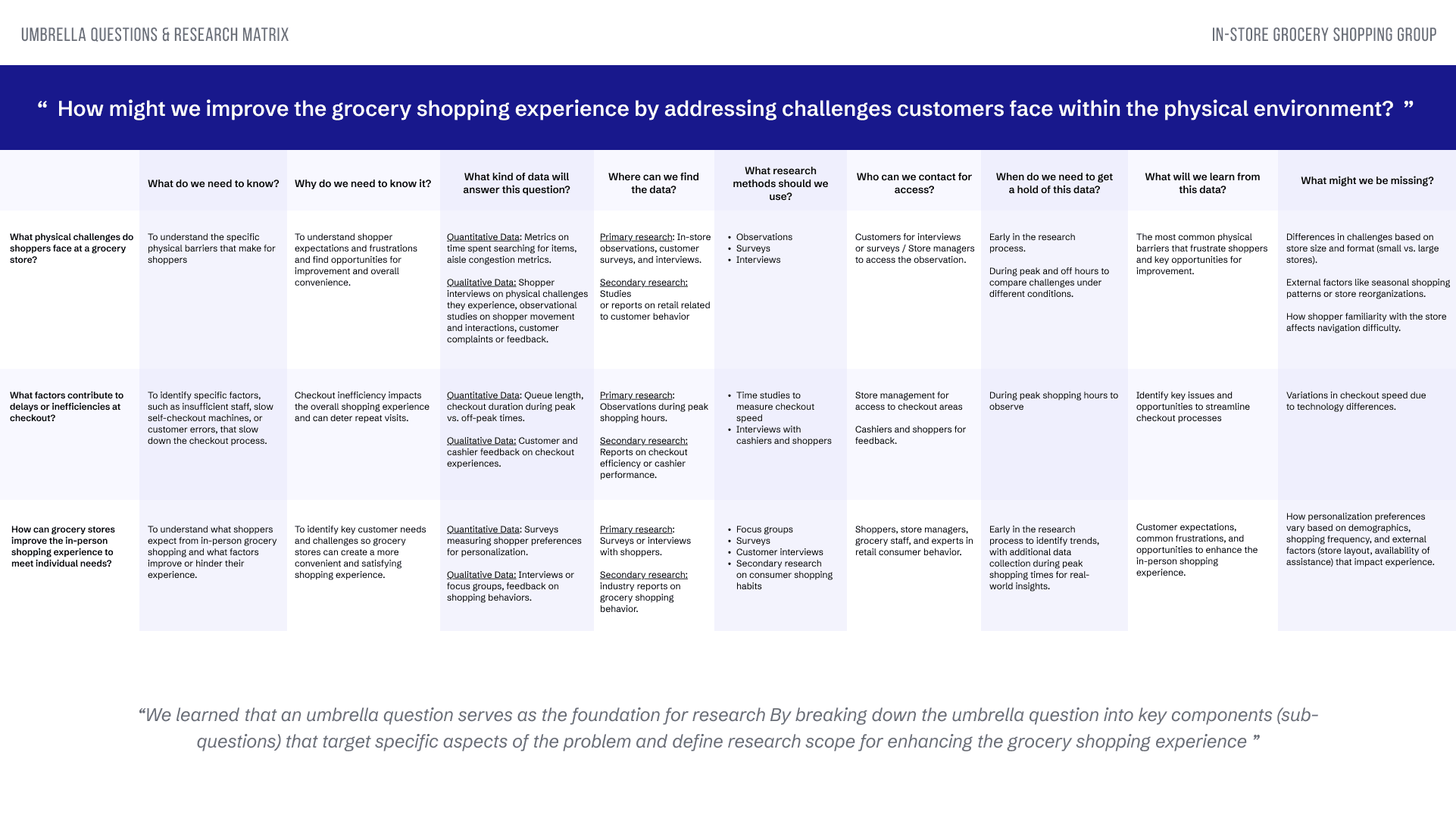
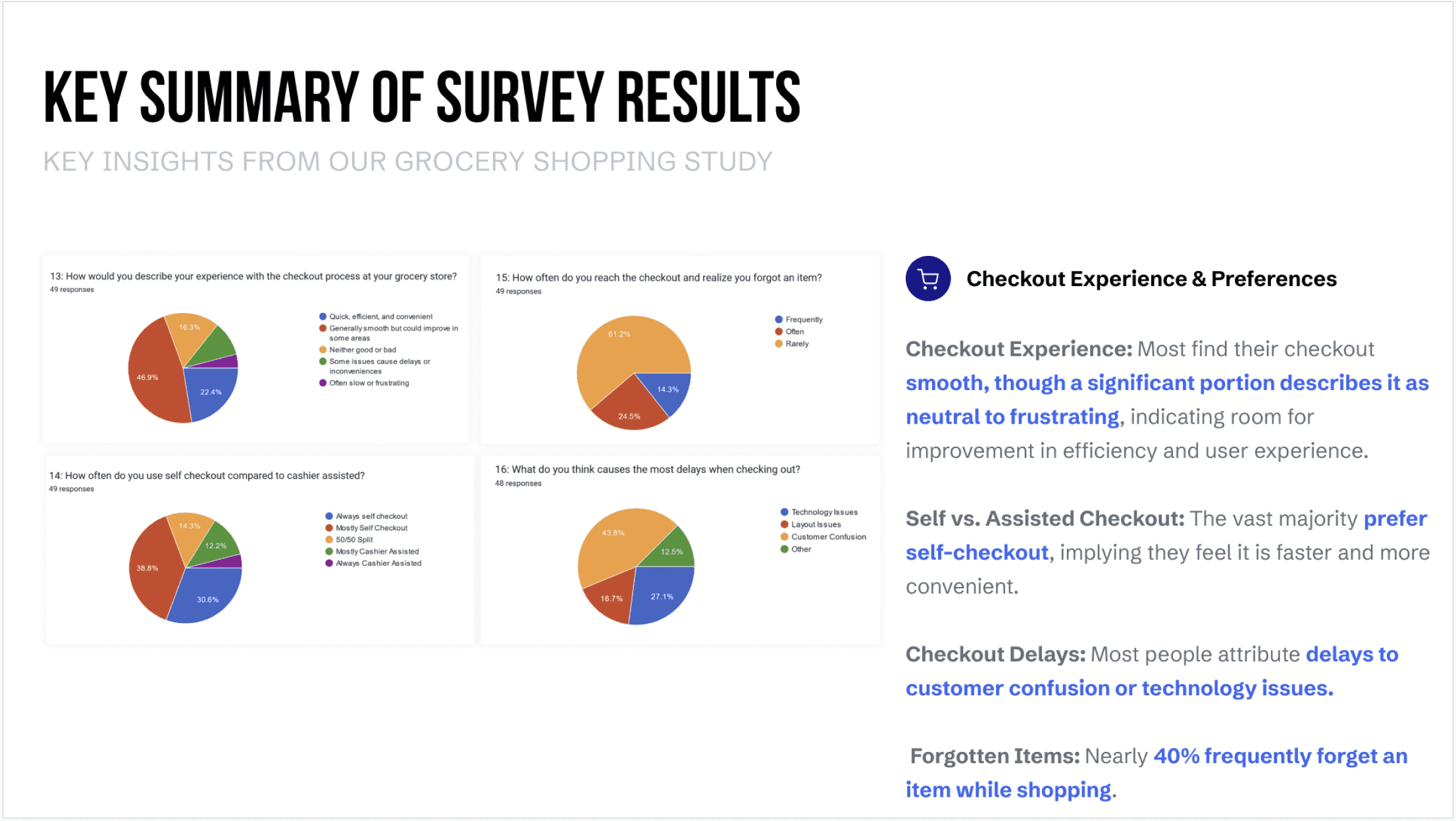
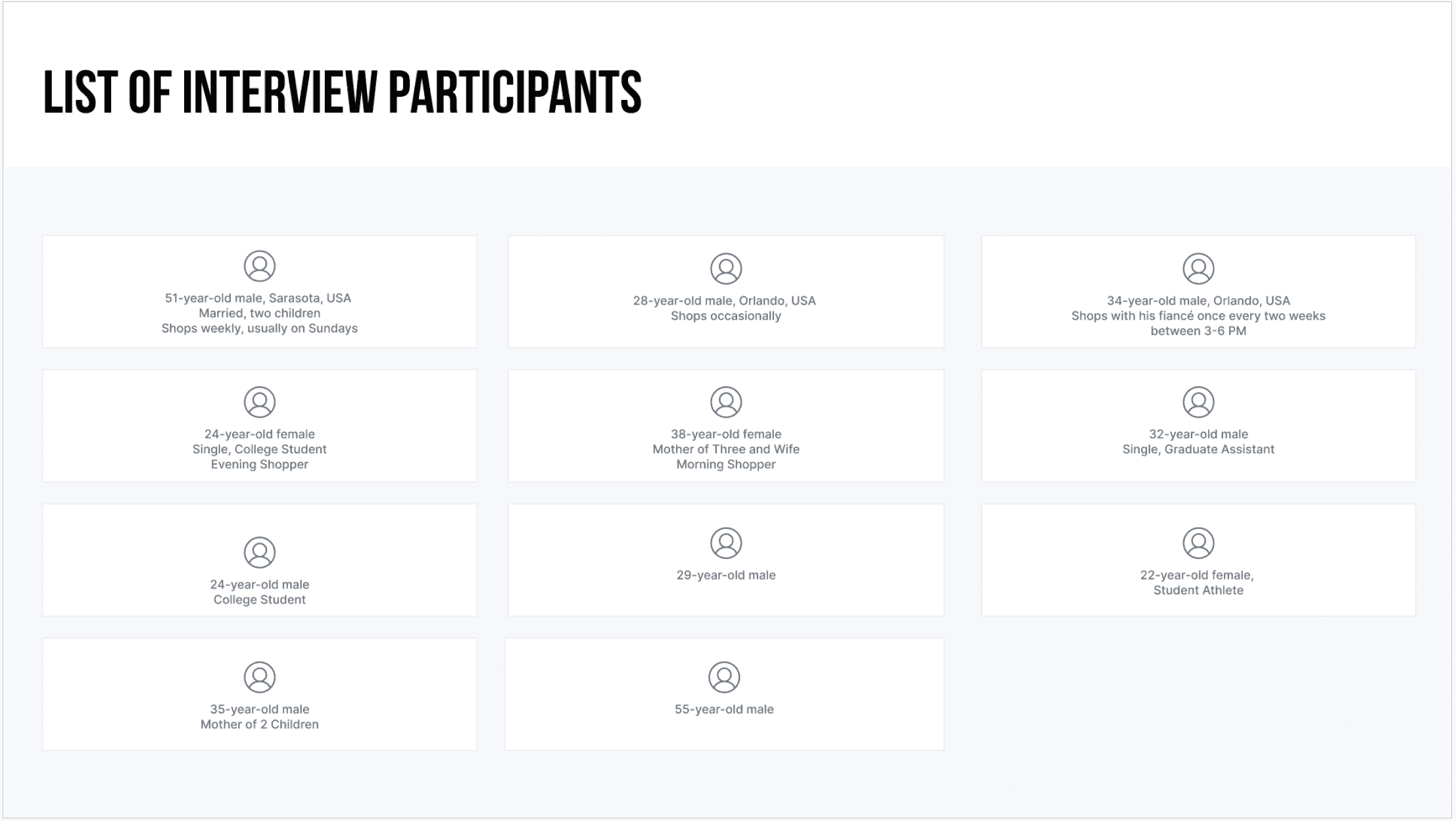
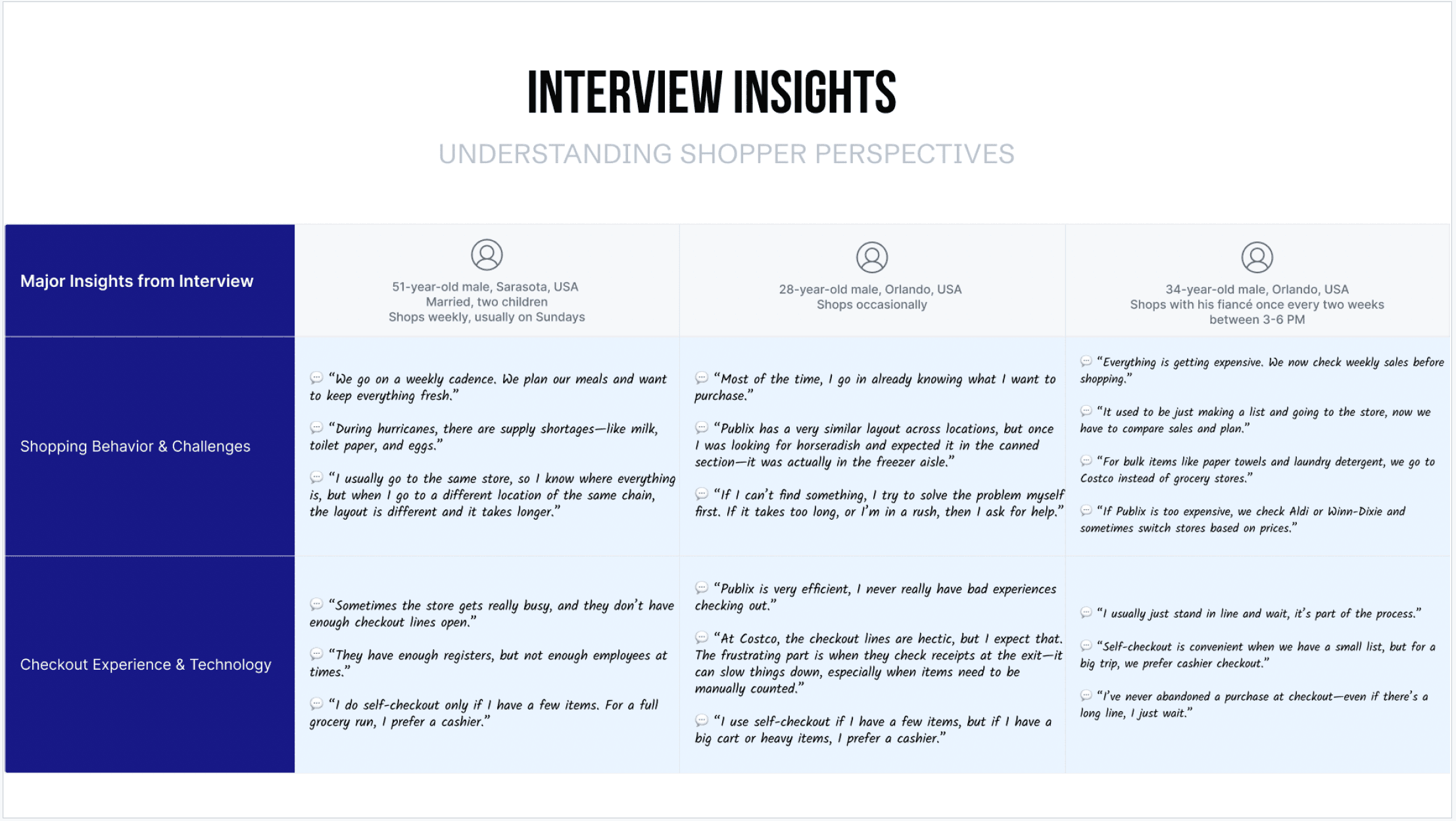
The project began with a combination of primary and secondary research to understand current in-store grocery shopping behaviors and challenges. Early on, we aligned on key research questions to guide field observations and data analysis. Primary research included field observations and analysis of customer behaviors within grocery environments, while secondary research drew from industry reports, articles, and existing consumer data. This phase grounded the work in real-world context and existing retail constraints.

Sensory Cues Observation
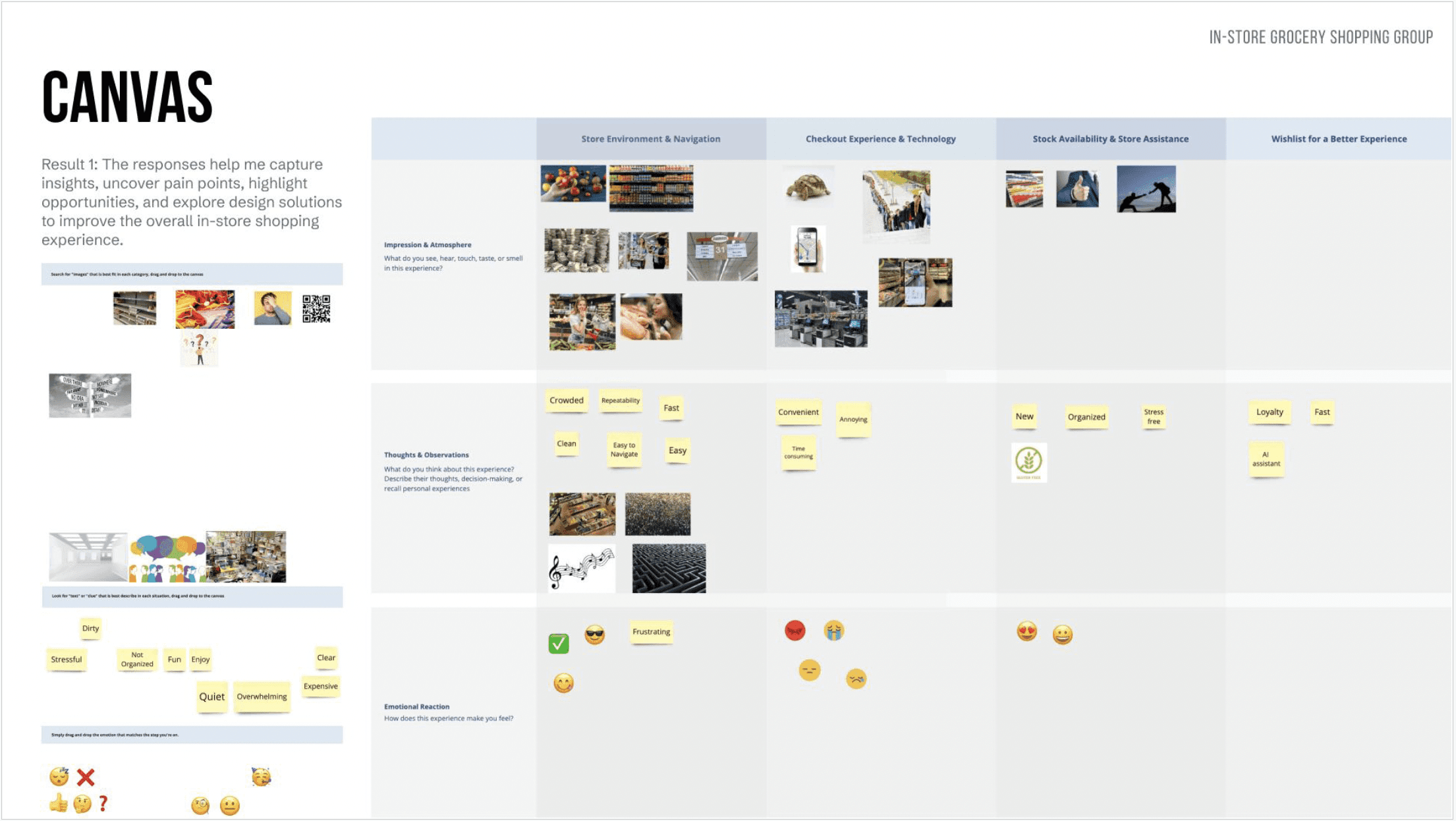
As part of our research, we explored the role of sensory cues in shaping the in-store shopping experience including sights, sounds, smells, and spatial atmosphere. These elements often influence how shoppers feel and behave, even subconsciously. We observed how store lighting, music, cleanliness, and signage impact mood, navigation, and overall satisfaction. Insights from this analysis helped us identify ways to make the shopping environment more inviting, intuitive, and emotionally engaging.
Stakeholder & Empathy Mapping
To understand the broader ecosystem, we mapped key stakeholders involved in the in-store grocery experience, including shoppers, staff, and operational touchpoints. Empathy maps were then used to synthesize observed behaviors, needs, frustrations, and motivations, helping align the team around user perspectives beyond surface-level pain points.
Journey Mapping
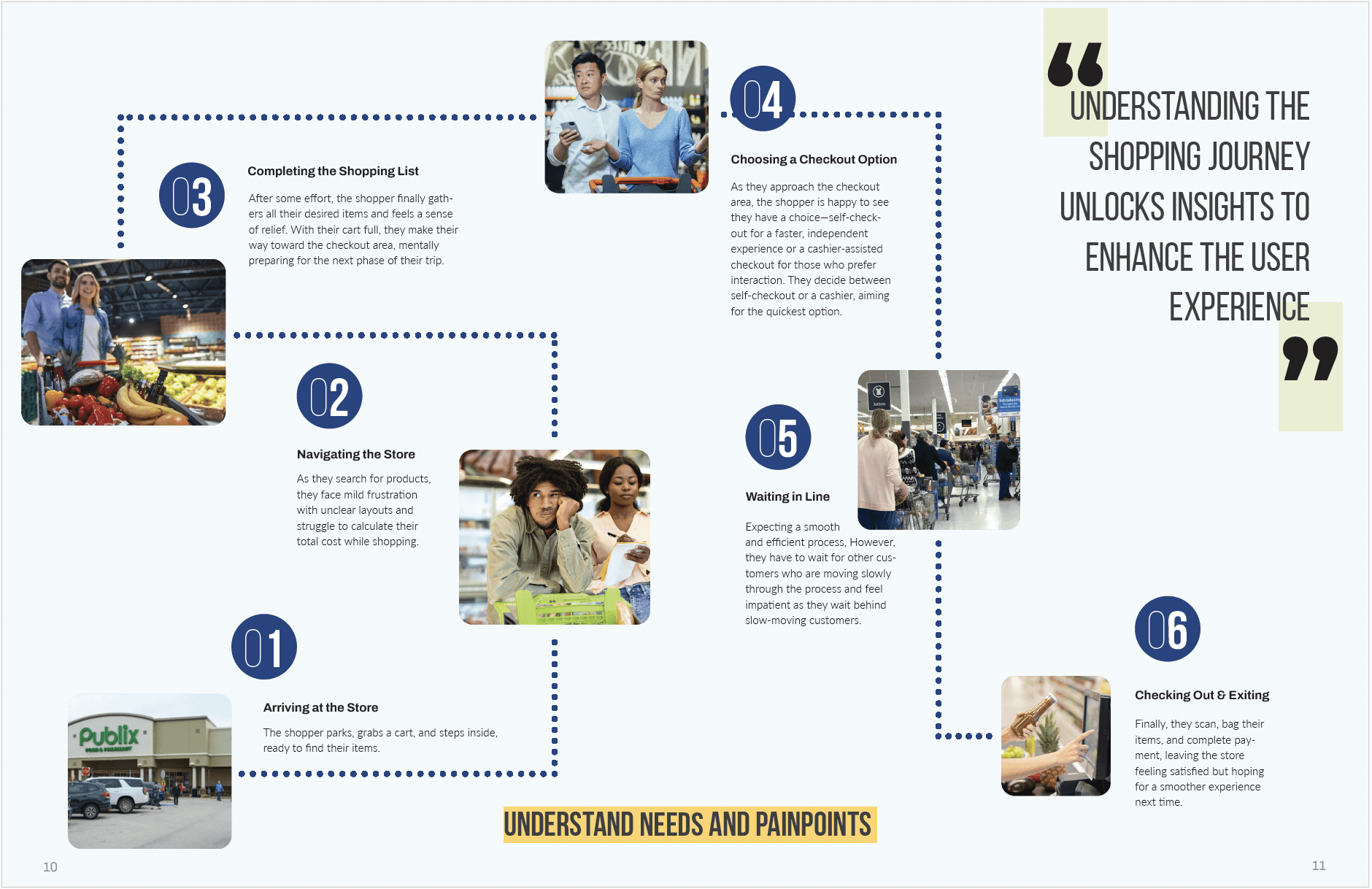
A detailed user journey map was created to visualize the end-to-end in-store shopping experience—from arrival and navigation to checkout and exit. This step highlighted emotional highs and lows, friction points, and moments of uncertainty, revealing where shoppers felt confused, rushed, or unsupported.
Insight Synthesis & Research Framework
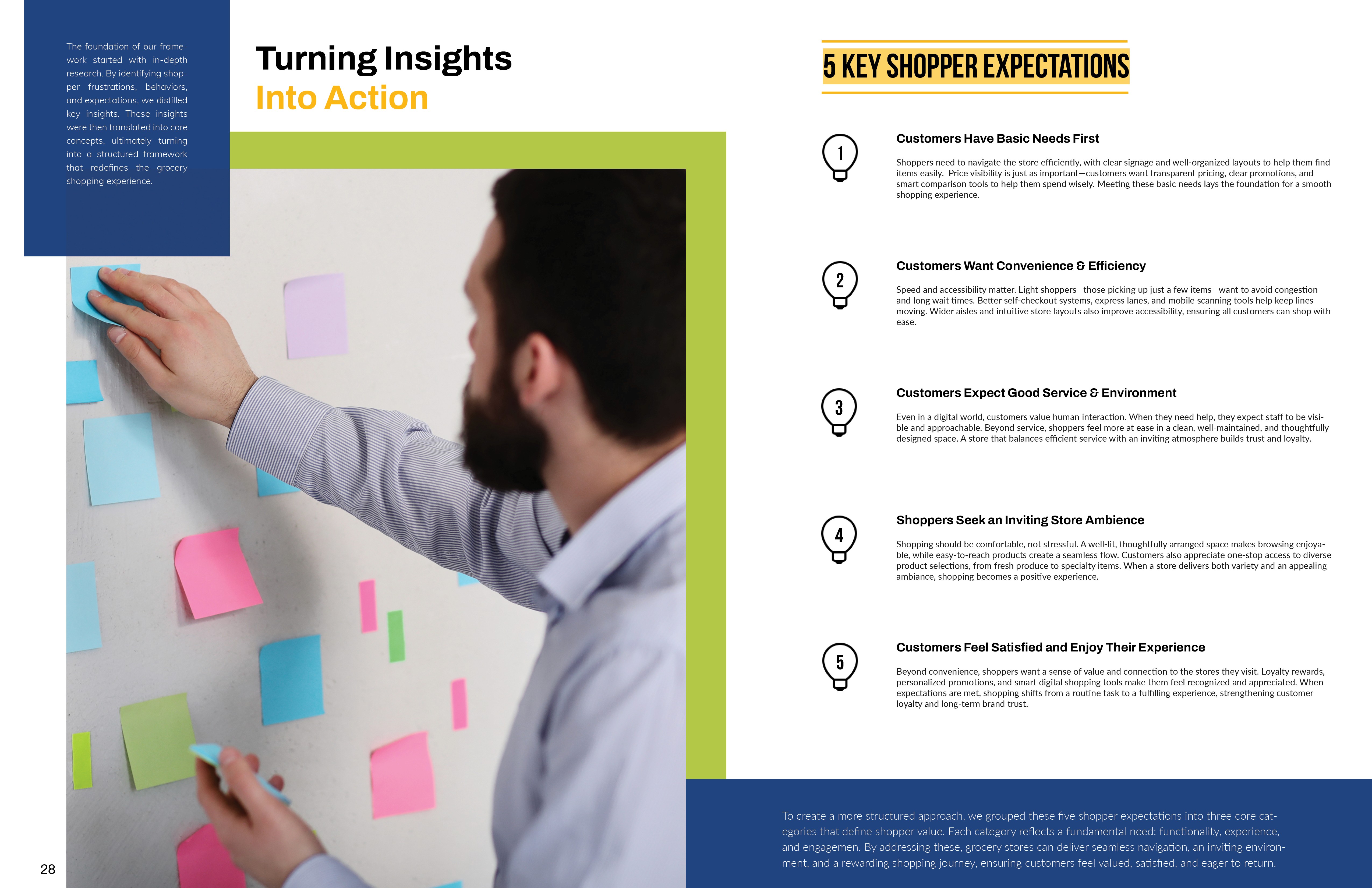
Insights from research and mapping activities were synthesized into a structured research framework. Patterns across behaviors, emotions, and operational constraints were grouped to define key problem areas and opportunity themes. This framework served as a foundation for aligning findings and guiding experience-focused recommendations.
Key Insights
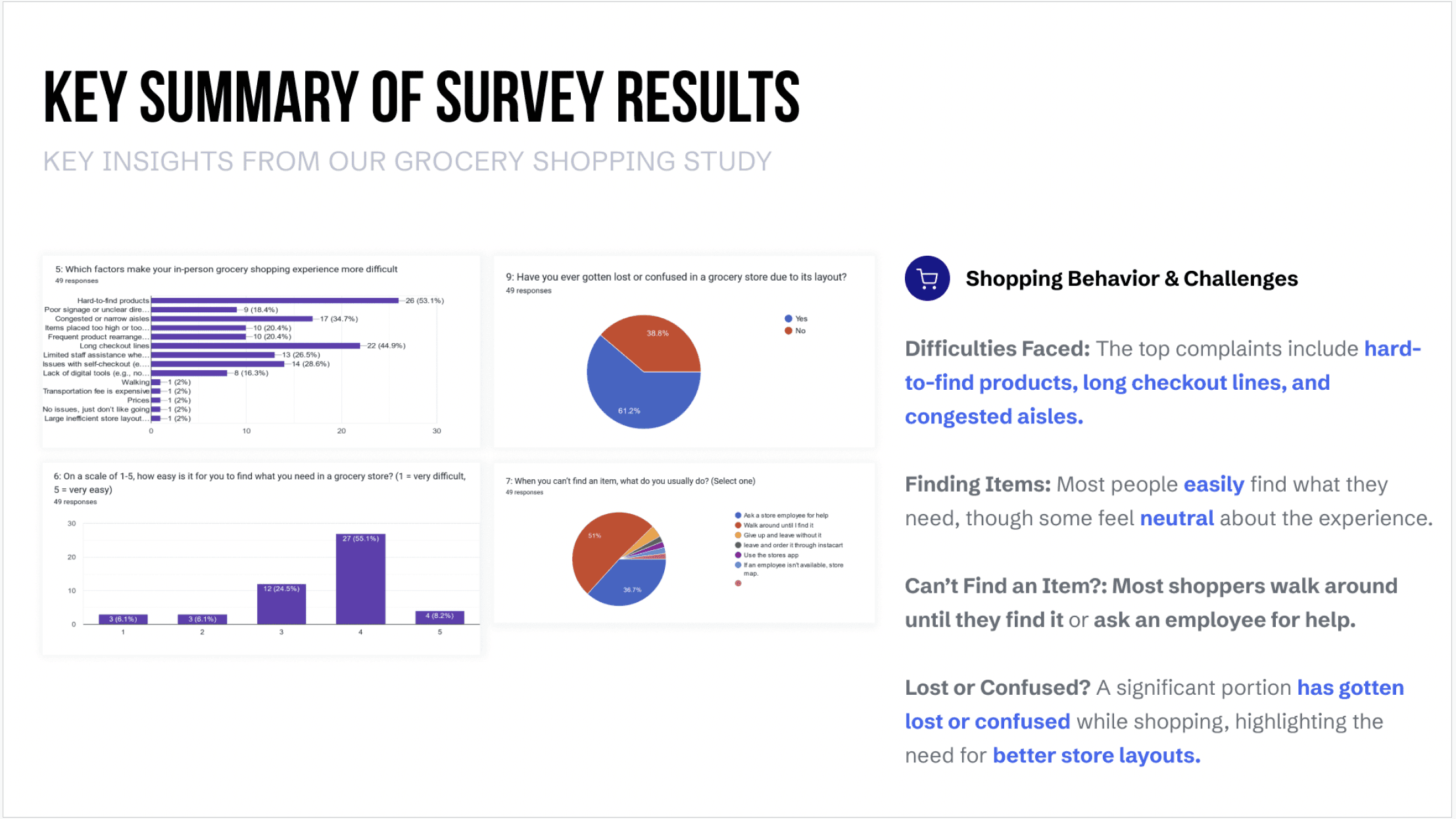
Shoppers prioritize speed and clarity: Long lines, poor signage, and crowded layouts create frustration
Technology is expected: Real-time stock updates, product finders, and personalized deals are increasingly desired
Customer service still matters: Staff availability and empathy shape trust and retention
Mobile-first behavior: Many shoppers plan and navigate using store apps but expect more accurate and intuitive tools
Emotional value drives loyalty: Clean, inspiring environments and personalized rewards create brand attachment
This helped us identify recurring pain points in areas such as store navigation, checkout experience, mobile app utility, and product availability.
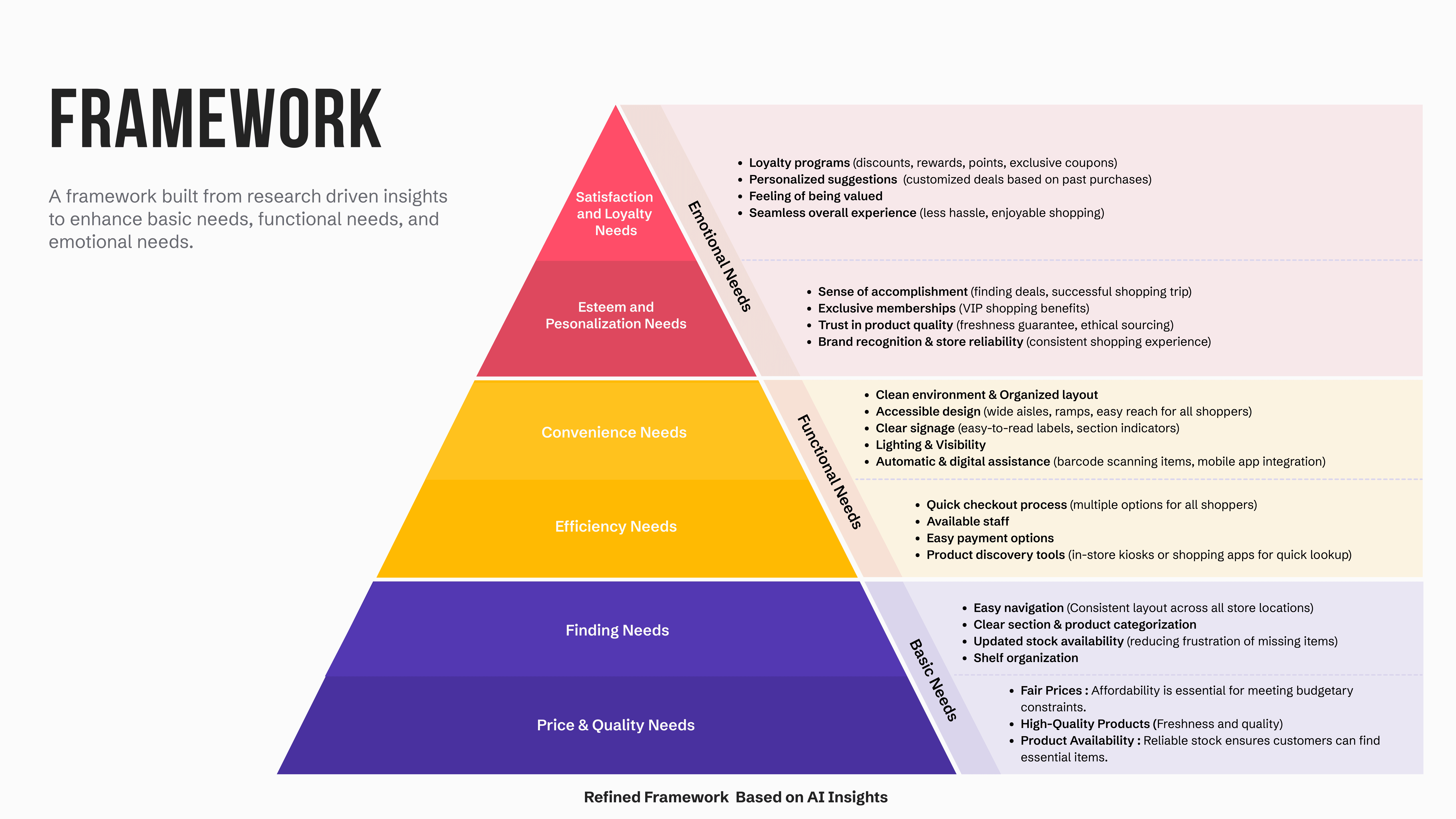
Framework: The 3-Tier Shopper Needs Model
To translate insights into action, we created a structured framework to guide grocery experience design:
Basic Needs – Navigation, product availability, fair pricing
Functional Needs – Speed, accessibility, clear signage, smart checkout
Emotional Needs – Trust, personalization, comfort, community connection
5. Conceptual Solution Exploration
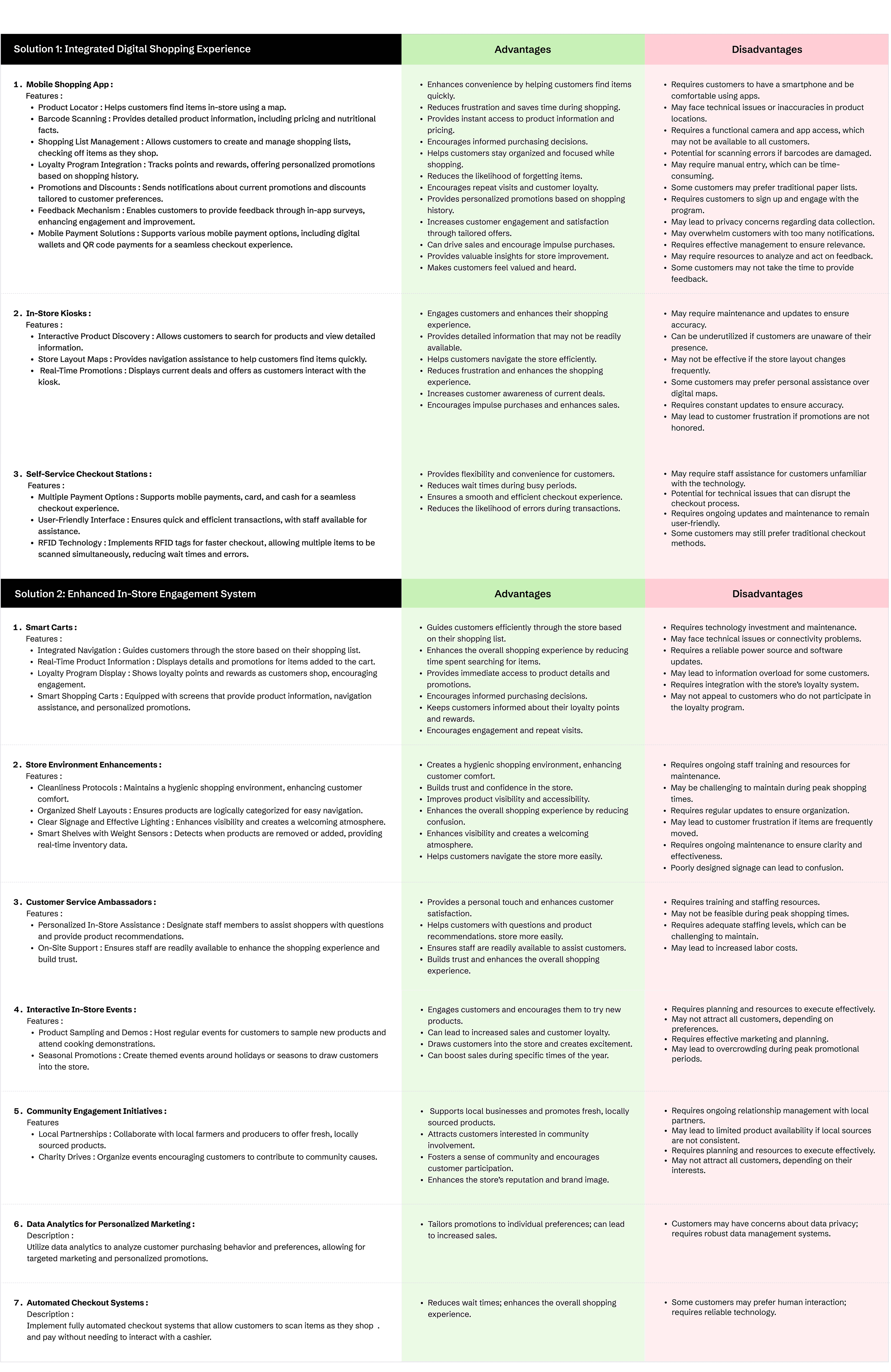
Based on the identified opportunity areas, we explored conceptual solution directions aimed at improving clarity, efficiency, and confidence within the in-store experience. These concepts focused on how design and digital touchpoints could better support shoppers without disrupting existing store operations.
Outcome
We delivered a scalable framework for grocery innovation and a set of design solutions that balance efficiency, technology, and human connection. These ideas aim to reduce shopper frustration and foster loyalty while giving retailers actionable steps toward future-forward in-store experiences.
Proposed Solutions
We presented two concept systems for modernizing grocery retail:
1. Integrated Digital Shopping System
Smart Mobile App: Product locator, barcode scanner, loyalty program, real-time stock, and checkout
Interactive In-Store Kiosks: Promotion displays, navigation maps, product education
RFID-Based Self-Checkout Stations: Fast, multi-item scanning and mobile payment options
2. In-Store Engagement Ecosystem
Smart Carts: Route guidance, deal suggestions, loyalty display
Improved Store Layouts: Organized shelves, lighting, accessible signage
Customer Service Ambassadors: On-the-ground support for questions and suggestions
Interactive Events: Demos, seasonal promotions, community initiatives
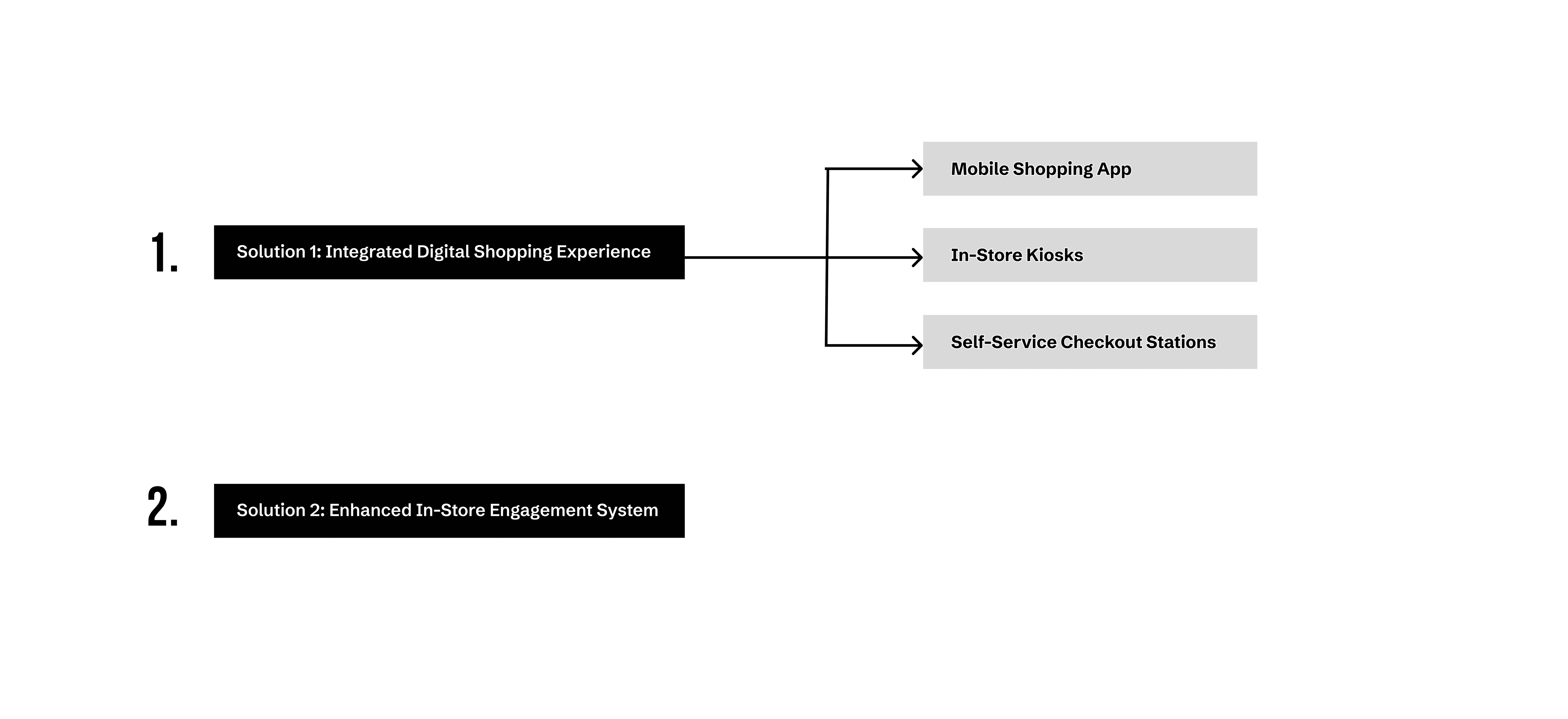
The diagram illustrates how multiple digital touchpoints could support a cohesive in-store experience.


Tool Used
Figma ✦ Miro ✦ InDesign